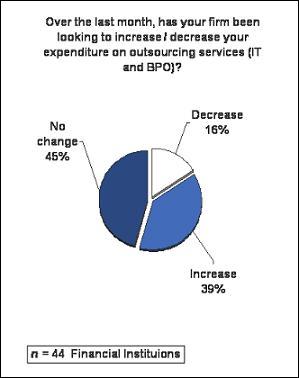
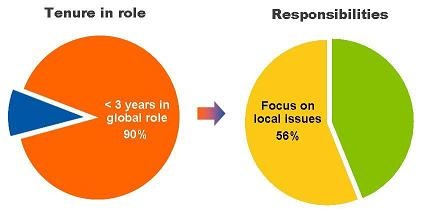
Outsourcing today is about providing your firm oxygen to stay alive, not cost savings

|

In today’s highly complex, uncertain, and difficult business environment, outsourcing might just save your business.  The whole focus on pricing and scoping outsourcing engagements is being completely rethought, as are the strategies of the leading service providers to support them. The IT and BPO services industry is reaching its most defining moment since Jack Welch doubled down on India in the 1990s…

The old 1-many outsourcing model only half works in today’s virtual environment.  In pre-pandemic days, outsourcing deals were rapidly moving away from the old “take the people” model, where the outsourcer rebadged a bunch of their clients’ staff, usually housed in service centers, and re-employed them as their own.  Adding staff to deliver fairly low-value work was treated with revulsion by Wall St – the Holy Grail was to take on new deals that required minimal labor additions to the outsourcing service provider, thus maximizing the immediate profitability of the deal. 

Automation became the antidote to this revulsion by enabling service providers to reduce labor dependency over the course of multi-year deals – however, this only works when the service provider takes ownership of the automation and has hard targets to hit to sustain delivery standards at lower costs.  Moreover, it’s proving more and more that automation rarely replaces people, it merely augments efficiencies and smooths workflows in a virtual environment.

Forget “mess-for-less”… we’re now doing “mess-for-more”.  The 1-many model worked in the past when there was a fierce determination from the client end to make a rapid transition to the existing service provider model, and a workable transition plan was set out in advance, to which both sides could commit.  However, this invariably needed a LOT of in-person sessions – at junior, mid and senior staff levels – to make possible.  Attempting to perform a fast-track transition from a messy enterprise set of processes to a standardized delivery model hosted by the service provider in today’s largely remote environment is practically impossible.  Talk to anyone attempting this and they will show you the lumps on their head and smashed laptop screens…. So forget about challenging remote-centric transitions and just move the whole lot across – people, processes, and technology (under the guise of an “asset transfer”) – and then figure it all out.  The only difference being many enterprises will be (or already are) willing to pay a premium to get to a deal.  And besides, it’s cool to have people again!

Today’s humungous people challenges and business risks actually make “taking the people” half possible.  We can go back to my very first blog (here) on BPO value in 2007, and we were droning on about moving to standard processes and new technologies back then to make BPO add value beyond the labor savings.  Fast-forward 15 years, throw in a two-year pandemic, spiraling inflation, chronic attrition, a military conflict in Europe, and a desperate need from enterprises to hurry into functioning virtual models and supply chains, and enterprises need more help than ever from third party outsourcers and their armies of millions of staff to keep their businesses moving forward. Outsourcing deals that involve talent moving to the service provider, many of whom may actually welcome their new employer, are looking a lot more appealing to many services providers in today’s environment.  

The cost to enterprises today is far greater than merely adding 10-20% onto staff salaries… it’s the massive attrition hurting the very continuity of their business operations, their customer engagement, their supply chain feasibility.  Pre-pandemic outsourcing “value” was calculated on highly tangible and legally contracted cost-savings, offset with the promise of future value from innovation.  While the benefits of innovation, how it was devised and achieved, is hard to quantify and attribute to actions and decisions taken many years in the past, you could always rely on the good old hard math to quantify whether an outsourcing engagement made sense from a financial standpoint. 

Today, the onus to outsource is far greater, for many enterprises, than merely saving on the bottom line and benefitting from greater efficiencies.  One can argue that outsourcing could keep enterprises alive if done right.  For example, if you had a team of crack cybersecurity experts and they got snapped up by Microsoft or some start-up awash with cash, you are in serious trouble… most providers are reserving their scarce cyber resources for their largest clients.  But if you have a major partnership with an outsourcing provider and your business is highly important to them, they will prioritize your needs.  If you’re a major FORTUNE 500 enterprise, you can likely rely on your major relationships with major service providers to help.  If you are a smaller client, having a large relationship with one of the mid-tier service providers could be extremely valuable as they will prioritize you, whereas the juggernaut providers will not.

Service providers that can retain, train, and develop talent to expand their skills are already becoming critical orchestrators of the business ecosystem.  We are in a war to retain people to keep our businesses functioning, and this is likely to be the case for several years to come as people reject employers who fail to develop them, pay them well, and offer them career expansion.  This is especially the case for staff working in operational roles, whether it’s part of a shared services organization, or a professional services firm.  Smart service providers are getting ahead of this with increased investments in their talent development efforts, wage increases across the board, and announcements of plans to open new service delivery centers in locations that have pools of concentrated talent that can be fast-tracked into their model.  We are also seeing several service providers target talent from community colleges and high schools, where they can offer them their own development experience that is highly relevant to their clients’ needs.

The Bottom-line:  The old math behind outsourcing decisions are dead because you just need your firm to breathe… and oxygen is priceless if it’s on offer.

Clients are quickly evaluating what talent is core to their differentiation and then determining whether they have the ability to attract, retain and develop it themselves, or whether they are better placed (and the risk lower) to partner with a service provider. 

Conversely, service providers are more hungry than ever to take on people they can integrate into their model to mitigate their own attrition risks, and cement deeper and far more strategic relationships with their key clients.  The main question now is whether the right firms are engaging with the right service providers to achieve mutual long-term success.  Those that get these new relationship decisions right to stay in the game will emerge as the leaders in their business ecosystems.

Posted in : Business Process Outsourcing (BPO), IT Outsourcing / IT Services, Talent and Workforce

Comment0 ShareThis 1094 Twitter 0 Facebook 0 Linkedin 0

Bill aims to thrill by positioning ServiceNow as the Control Tower for Digi Transformation

|

If there’s one voice moving tech markets more than most these days it’s ServiceNow CEO Bill McDermott.  After a decade at the helm of SAP, where he articulated the firm’s vision to embrace the cloud, he made the intriguing move to take the CEO role at ServiceNow, just a few months before the pandemic.  Since then, he has more than doubled NOW’s stock price, and the market cap has rocketed to an eye-watering $110 billion.

HFS has led the industry’s coverage of the services market for automation, data and IT orchestration since we launched RPA onto an unsuspecting industry in 2012, and ServiceNow has propelled itself as the darling of the CTO in recent years as the industry’s leading IT orchestration platform with a key focus on low-code and automation. What’s also highly intriguing is the recent partnership with process intelligence platform Celonis where the orchestration darlings of both IT and finance are making a go of building an engine that finally combines process design and intelligence with IT orchestration and automation.  So let’s hear a bit more about what makes Bill tick, as we grabbed some time with him…

Phil Fersht, CEO and Chief Analyst, HFS Research: Bill, it’s great to get some time with you. So, from a personal standpoint, was being a tech CEO something that you dreamed about when you finished up in college? Did you expect your career to go like this, to end up doing what you’re doing now?

Bill McDermott, CEO, ServiceNow: Well, at that point in my life, you know, I was a teenage entrepreneur, running my own business, going to high school and college. And I loved running that business. But my dream, when I graduated from college, was to get a job with a corporation. And in that era, you know, getting a job with Xerox or IBM, that was probably the pinnacle. It might’ve been like getting a job at Google, or perhaps Apple, today. And I got the job at Xerox, which is quite a story, I tell it in my book Winners Dream. But, you know, at that time, I just wanted a shot. I wanted to be somebody in the world. And I got my first job at Xerox, knocking on cold doors in New York City for a living.

Now, I will tell you a story. When I left that day, from Long Island to New York City, I was reading the annual report about the then CEO, David Kearns, who was reinventing Xerox into something called Total Quality Management, which later became known as Six Sigma. They call it design thinking and innovation today. But I was so impressed with Kearns that, by the time I got to New York City, I had my sights set on being the next David Kearns, at least in my mind. So when everybody else was going for the sales job, I told them that my dream was to be the next David Kearns. So, you know, maybe to some extent I did have a spark of that CEO dream inside me.

Phil: I remember TQM well, from when I just was starting out in the 90s, so that brings me back! I’d like to move to the Celonis partnership. How do you see this evolving, now you’ve had a chance to see each other up close? Is this what you expected? And where do you think it’s going to take you?

Bill: Well, it kind of brings back memories of when I was CEO of SAP because I was the one that approved Celonis in the partner network of SAP, back in the day, and they were all about collaborating with ERP, and really bringing process innovation to the equation, with a company like SAP. And Celonis CEO Alex Rinke will tell you, what he enjoyed about working together back then is, he’d send me an email in December, and he’d be like, “Hey,” you know, “Basti and I just got a deal with such-and-such,” and within a few minutes he’d get a, “Congratulations,” and, “Let’s go get another one,” note from me. So we kind of got on very well.

And then, when I came here, I recognized the idea of business process innovation, as a big elixir to the whole platform automation concept. So the reason why it works is Celonis does the x-ray of what’s broken, and then that immediately gets activated in the workflow automation platform of ServiceNow. So we can rethink the way business is being done in a hyper-automation context. And that, to me…it’s really special.

So we’re partnering at the engineering level, at the go-to-market level, and obviously at the executive level. And what’s interesting – and you can check this, Phil, and I want you to – Alex’s note to me was congratulating me on the deal that we just got together in the marketplace. So what I find quite interesting, as much as things change, some things do stay the same.

Phil: [Laughs]. That’s great. Is the tech industry very different today than it was two years ago? And will it be different again in another two years?

Bill: Yes, and yes. I think one of the things that is only now gaining full understanding and recognition is that the 20th Century architectures, some were on premise, some were first-generation SaaS, they cannot keep pace with an ever-changing digital world. And I believe that this hyper-automation concept is going to play out in IT, it’ll play out in the employee experience, the way you service the customer, and obviously in the low-code revolution that’s taking place.

So I believe that hyper-automation platforms like ServiceNow, and I believe ServiceNow specifically, will be the control tower for digital transformation. And that’s not at anybody’s expense. Nobody has to lose for us to win. But I think companies are now realizing, “Hey, if I want to keep my operation secure,” “Hey, if I want to give my employees a great experience and win the talent war,” “Hey, if I want to go direct to consumer, and rethink the way I relate to my customers and predict their next needs,” or “I want to build the applications of the future, but I want to do it in minutes or days, not months and years,” you’re going to need a platform like ServiceNow.

“I believe ServiceNow specifically, will be the control tower for digital transformation. And that’s not at anybody’s expense. Nobody has to lose for us to win.”

So where do I think it goes in a few years? I think the platforms that are consumer-grade, like ServiceNow, become even smarter, even more predictive, and even more agile, to deal with the world’s biggest challenges. I’ve always said that the world’s biggest challenges are the world’s biggest opportunities.

So you say, “Well, give me an example.” Think about hyperinflation. The greatest combat tool for hyperinflation is digital transformation. It’ll be $10.7 trillion invested in digital transformation, in the next few years. Platforms like ServiceNow can be revolutionary. If you think about an environment where the consumer isn’t going to come to you anymore, and you have to go to the consumer, you now have a chance to create new channels of innovation. It doesn’t mean the old ones are completely gone, but it does mean frictionless business is going to replace everything. And a lot of that is because companies have to do more with less, inflation, interest rates, supply chain dislocations, moving from global, to regional, to local, all these transformations will have to be platform-driven, and the smarter platforms will play out in the metaverse, they’ll play out in 3.0, and obviously, the enterprise participants, if they’re not consumer-grade level, they will lose, and they will lose fast.

So that’s what I see in a couple of years.

Phil: Is there anything from your decade-leading SAP that’s helped you at ServiceNow, Bill?

Bill: Everything that I did for a decade at SAP has helped me at ServiceNow, Phil. I have very high respect for my experience there, and all 100,000 of my friends at SAP. I loved every minute of it. We were a truly global company, and that’s the way I ran it, that’s the way we had the strategy, and that’s the way we evolved the company into the cloud, and many other things. So I learned so much, and I’m grateful for my experiences. But I also learned, and what I already knew, going into SAP, that it’s all about people, and if you can lead people, you can do a lot. And I have felt, my whole life, that the art of leadership is developing followership, and the bigger the company, the better I like it, because that’s the more lives that you can touch, and the more followers you can gain, to achieve great missions. So it’s been an honor of a lifetime having jobs like these. I’m the luckiest guy. No, I really am.

“Companies have to do more with less, inflation, interest rates, supply chain dislocations, moving from global, to regional, to local, all these transformations will have to be platform-driven, and the smarter platforms will play out in the metaverse, they’ll play out in 3.0, and obviously, the enterprise participants, if they’re not consumer-grade level, they will lose, and they will lose fast.”

And, Phil, before you go, just real quick, you know us well. Is there anything you can share about where you think we are?

Phil: Sure, Bill. I think this whole push around workflow platforms and automation is absolutely the right place to go. And we are in the biggest talent crunch we have ever experienced. This is a long-term thing that we’re going through, this is three, four, five years in the making. So creating platforms that can enable the automated business is where things are shifting.

But being able to bridge, I think, the divide between technology brilliance and process redesign is the key. And if you can get into that, if you can bridge that gap, as an orchestration engine, you’re going to be the envy of the industry. I think there are still some ways to go, but I think the partnership with Celonis is really fascinating. The mindshare that you’ve built, in the last two, three years, in particular, has been very, very strong, and now the ability to build cross-process platforms is the holy grail. So it feels like you’re getting there.

Bill: Thank you very much, Phil. That’s great insight. You know, I start my days very early in the morning, and I end them with Asia at night, from California, and I can tell you, there isn’t a single CEO conversation, including many that I’ve had today, that doesn’t always start with this whole idea of IT has become the business strategy, because these companies have to be secure. They’re very concerned about the environment that they’re operating in, for all the reasons that you know. They have to service the business. Because of this talent war, the employee experience, from recruiting and hiring, onboarding, training, managing, all the services for the employees, at a consumer-grade level, is on everyone’s mind, because the greatest asset you have, if they walk out the door tomorrow, it doesn’t really do you a lot of good to have big buildings. Right?

Phil: Yeah of course…

Bill: And, you know, it’s so funny, Phil, we had 97 CEOs from around the world at the event Alex was at. The direct-to-consumer revolution, and how you can predict experiences, and really get the Net Promoter Score, and the whole idea of customer loyalty, end-to-end digital, is hitting a complete breakneck speed now. And, you know, these 20th Century architectures, they weren’t designed for that, so we’re very fortunate to have a clean sheet, 21st Century design.

I just got off the phone with a bank that’s modernizing 5,000 applications, and I said, “Well, you might want to think about low-code because you’ll never get there any other way.” And then we talked about the next steps on the Now Platform, that they didn’t even know we did that. So part of what our brand is driving is: “The world works with ServiceNow,” which describes the bandwidth of what we can do in the global economy, by geo, by industry, by persona, to fundamentally simplify the complexity that’s been built over a half a century, and give people the consumer-grade experience across the enterprise.

Phil: Well, that’s brilliant. Thank you very much, Bill. I appreciate the time and it was nice to meet you.  I know our readers will love your insights!

Posted in : Digital Transformation, OneOffice, SaaS, PaaS, IaaS and BPaaS

Comment0 ShareThis 898 Twitter 0 Facebook 0 Linkedin 0

Don’t you just love April the First!

|

Posted in : Absolutely Meaningless Comedy

Comment0 ShareThis 85 Twitter 0 Facebook 0 Linkedin 0

HFS Research partners with Zoom to Improve Employee and Customer Experiences, and Eliminate the Mute Button

|

According to Chris Smith, Zoom’s strategy lead, “We needed a partner which enjoys huge value from its deep client interactions, and we’re delighted HFS is willing to trial this and write about its experiences with its huge community of business leaders.” 

While this seems like a good idea in principle, there is some concern that some executives will feel like their civil liberties are being taken away, however, HFS CEO Phil Fersht is confident the joint venture will be a success.  “Taking away your mute button isn’t like being forced to wear a mask.  It’s about being able to express yourself without the temptation to hide behind that little button.  Am pretty confident most people will see it that way and join us on our mission to end the mute frustration.”

HFS chose to work with Zoom over Microsoft Teams, as the analyst firm leadership felt people would be more confident to lose the mute button having the benefit of Zoom’s “touch up my appearance” feature.  “When my face is free from blemishes and the effects of last night’s vodka martinis, I am much happier for people to enjoy the sound of my emancipated voice with my gorgeous face”, said an HFS analyst who preferred to remain anonymous.

HFS principal analyst for employee experience, Will Rock, is not quite as bullish about the joint venture, “Sometimes my boss just gets a bit too carried away with himself.  Taking away one’s mute button is like taking away their freedom.  But we might as well go along with it as Zoom sent us all these really cool Yeti mugs”.


To learn more about HfS Research, please email [email protected]

# # #

Note to editors: Trademarks and registered trademarks referenced herein remain the property of their respective owners. 

MEDIA CONTACT: 

Chav McTrevor

HFS Research

[email protected]

And of course… this was an:

Please, please don’t tell me you fell for this again for the THIRTEENTH time!  …And I know some of you did =)

And while we’re reminiscing about falling for April Fools’ gags, here is 2021’s classic:

HfS Research receives $223 million in Series C Funding to become the world’s favorite tech analyst firm


And 2019’s

Quantum set to destroy blockchain by 2021

And 2018’s

How blockchain will change the world in many more ways than you realize. It’s cataclysmic

And 2017’s

Yamazaki, Macallan and Redbreast lead the inaugural HfS Premium Whisky Blueprint

And 2016’s

HfS launches new unDigital magazine

And 2015’s 

HfS announces its entry into the outsourcing advisory market

And 2014’s 

HfS and Blue Prism partner to develop automated analyst solutions 

And 2013’s 

Phil Fersht steps down as HfS CEO

And 2012’s

Merriam-Webster to remove the term Outsourcing for IT and Business Services

And 2011’s

Painsharing exposed: HfS to reveal the worst performers in the outsourcing industry

And 2010’s:

Horses for Sources to advise Obama administration on offshore outsourcing

Oh, and here’s 2009’s which I really hope you didn’t fall for too (and many did):

Horses Exclusive: Obama to ban offshore outsourcing

Now if you fell for all TWELVE of these, please ADMIT TO THE WORLD YOU NEED A CRASH COURSE IN GULLIBILITY COUNSELLING AND FOREVER HOLD YOUR PEACE 🙂

Posted in : customer-experience-management, HR Strategy, Talent and Workforce

Comment0 ShareThis 530 Twitter 0 Facebook 0 Linkedin 0

Celonis separates the wheat from the PAF to open up the Microsoft ecosystem

With SAP squarely in its rearview mirror, Celonis’s PAFNow acquisition sets it up to tap an even bigger enterprise technology ecosystem, Microsoft  

One-time HFS One Office Hot Vendor Celonis has acquired Process Analytics Factory in a $100m cash and stock deal in a move that takes Celonis deep into serving Microsoft Power users. The software unicorn is already moving very quickly to integrate PAFnow’s technology with Celonis EMS, so this isn’t a case of buying and killing off competition or leaving it to run independently.  Moreover Celonis and PAF come from German process engineering and analytics roots, so their respective DNA will likely blend well to form a process analytics powerhouse.

Didn’t Celonis already do all this process mining stuff? Why acquire a much smaller competitor? 

PAFnow was founded in 2014 and is based in Darmstadt, Germany. It claims to be a disruptor in the process mining market with unique recognition for innovation through both state and federal grants over the years. PAFnow has a process mining product that is embedded in Microsoft Power BI, and it automatically learns how your business processes work, detecting any hidden deviations. In March 2019, PAFnow became available free of charge for all Microsoft Power BI users worldwide.  

In our Process Intelligence Products Top 10 (see rankings below), we found that PAFnow customers clearly loved its ability to natively hook into PowerBI and the Power platform, and be up and running in weeks. A PAFnow client that is a German multinational automotive corporation shared with us their experience working with the company, “The combination of BI and process mining is the key driver. if we do projects, 80% of clients are interested in simple KPIs and numbers. if they figure out something wrong, they want deep dives, diagnostics, and figure out root causes. We can use process mining fantastically there. With other process mining tools that are also used in our company, we don’t have options to create BI dashboards. For us, that combination is the key driver.”   

Natively hooking into a business intelligence platform like Power BI is a strong enough motivation to get started with PAFnow, as most process mining users need strong data visualization to understand the insights coming out of system log data analysis.  However, the fact that Power BI is part of the Microsoft ecosystem is where the magic happens, for clients, and certainly for Celonis. The automotive client, for example, shared “The ecosystem they [Microsoft] built around PowerBI, like Powerapps and UIflows, most of which comes for free, makes it very interesting. We initially thought RPA would be a very big use case, but there is so much potential for [data and process] transparency, RPA is something smaller in efficiency potential. If you work with SAP processes, you could introduce simple RPA for automating order purchases, sure. But not that much for us… However, I know with UI flows, options of automating processes with Power BI and process mining as the backbone is possible within Microsoft.”  

What can clients expect? A faster way to get going on process intelligence – and beyond 

Many organizations in our research have shared that their process mining projects have stalled due to challenges with getting access to system data and data integration across multiple ERPs and tech platforms. Data security, risk and compliance, and cloud concerns have held back potential process mining projects for many clients. PAFnow shone in those scenarios, not least also sidestepping tedious procurement processes by being available for free directly through PowerBI. Now the ability to use Celonis’ underlying process mining engine, and eventually EMS’ process orchestration capability through Microsoft opens up the possibilities for enterprises that are already invested in the MS ecosystem and want a rapid solution.  

The “Celonis Experience”, coming soon to a platform near you 

The plan for Celonis is to integrate Celonis Execution Management Suite with Microsoft Power BI reporting, collaborate with Microsoft Teams, and trigger flows in Microsoft Power Automate. Yet, the proof here will be in the pudding. There is still a big chasm to progress from all those disparate insights to actionable insights to ultimately automation. At the same time, these insights need to be transferable between different domains and functions. Only this way will organizations progress toward the OneOffice. 

It is within this context that we see automation and process intelligence capabilities moving into ISV ecosystems. But make no mistake, ISVs are not entering those markets, rather they expand their platform capabilities. Thus, from SAP to ServiceNow and now Microsoft, Celonis is getting closer to where work gets done, rather than just providing static data and insights – this was also our initial hypothesis when EMS first came out. All while steering clear of RPA. The ‘Celonis Experience’ as the vendor calls it is envisioning being the intelligence layer or ‘brain’ underneath major enterprise tech platforms… Salesforce is likely in the works, for example. SI partnerships are starting to follow this dynamic too, such as IBM’s Intelligent Workflows technology-enabled solution featuring Celonis EMS under the hood for process insights. 

Yet, there is another take on this expansion of capabilities. Celonis is positioning itself more and more as an automation company rather than a process intelligence. The likely focus of this positioning are possible investors who see more value in end-to-end solutions. Tellingly after Celonis announced its partnership with ServiceNow, the latter CEO Bill McDermott started to talk up automation as the next addressable market in earning calls. His vision is leveraging Celonis as an X-ray to capture process variants and challenges as well as to stream operational telemetry data. So that the ServiceNow platform can capture those inputs to design workflows in the cloud and ultimately offer actions and automation. The Holy Grail is to progress to actionable insights not just vast repositories of data. 

The Bottomline: Celonis has opened itself up as the leading multi-environment process intelligence platform 

Celonis’ next round of growth is going to look very different from its past, and it’s all about close integration with major enterprise tech darlings. The next frontier is about demonstrating actionable insights and automation on those inputs. Celonis just added another ecosystem where it can do exactly that. 

Posted in : intelligent-automation, OneOffice, Process Mining

Comment0 ShareThis 427 Twitter 0 Facebook 0 Linkedin 0

Forget the Great Resignation, we’re in a Great Big Mess. Time to wake up to our new reality…

| ,

Rewind exactly two years… we were shutting down the civilized world so quickly we could barely process what was happening to our lives, our families, our children, our jobs – even our pets. There was this eerie week where many of us just carried on as normal as the realization sank in that our world was changing dramatically, and nothing would be quite the same again. 

This is the calm before the storm

Just as we’re peering out of our caves and rubbing our bleary eyes at a world recovering from a two-year pandemic… a world with the most vibrant investment climate ever, people gleefully hopping employers for salaries they had never dared even dream about, companies making stacks of money which they barely know what do to with… and all we were worried about was a bit of wage inflation and our pathetic attempts to combat carbon emissions. Suddenly everything has changed again… and changed very differently.

The reality

Firstly, we’re not going to predict how this ends. Noone can. But we can draw up scenarios of what will happen to the world and our industry as the reality of what is happening sets in:

The global economy will hurt, and IT and business services are caught right in the mix. There is no way around this. The question is to what extent, but the prospect of a looming energy crisis, a humanitarian crisis, great uncertainty, rising inflation, and a crashing Russian economy will significantly reverse the rampant growth that emerged from the pandemic recovery. 

Wage inflation + attrition + economic tightening is already putting huge pressure on services firms. Some will struggle to survive this. Demand for immediate support for all types of IT and business support services is higher than ever, with the hurry to the cloud the desperation to modernize systems to remain effective in the virtual economy. As if this wasn’t challenging enough, throw in the uncertainty of military conflict in Ukraine and neighboring states, which fuel the continuity of European enterprises. The cost and capability to execute basic services are being challenged like never before.

Enterprise clients of services will struggle to meet rising prices. The services industry has done a fantastic job keeping services pricing steady over the last couple of decades. Whatever hardships arose – such as the 2008 crash, wage inflation in critical service delivery locations such as India, Philippines, and Central/Eastern Europe – these have always been offset by increases in delivery efficiencies, automation of IT and business services, and advancements in technologies such as conversation AI and smart tools that convert analog activities, processes, documents, etc. into digital formats. However, the rising cost of services is driving service providers to increase prices to stay profitable, and many enterprise clients will struggle to meet these increases. The services industry has reached a dangerous tipping point between cost-effective delivery and simply becoming an unattractive proposition for clients.

Many industries are highly vulnerable to high energy prices. Industry sectors such as industrials, infrastructure, automotive manufacturing, telecommunications, real estate development, and public sector financial services will experience margin pressures like never before due to the looming energy prices. Combine this with the painful impacts from the Chinese slowdown, the fallout from the Ukraine crisis, unpredictable supply chain disruption, and rising stagflation in the US and Europe, their ability to meet the rising prices of IT and business services critical to keep them functioning in the virtual economy will be severely tested. Companies like BP, Shell, Equinor ASA, Nestle, Bunge, Imperial Tobacco, Volvo, Daimler Truck, Renault, and VW are just examples of enterprises strongly impacted by their ties and investments in Russia and Ukraine. Sectors that are less vulnerable are private banks, consumer staples, pharma, healthcare, utilities, upstream oil and gas, and IT.

Many new services engagements will be delayed as many enterprises absorb this new reality.  We are already seeing hesitancy from enterprise leaders in signing new services deals until they have a clearer picture of the landscape, their own financial position, and the selection of locations and partners to deliver the work.  While we came into this year expecting a further 10% increase in IT and business services spending, we think this will shrink to something closer to 5% amidst the uncertainty.

The Bottom-line: This completely unnecessary and bloody mess that Russia has created by invading Ukraine will likely have a crippling effect on Ukraine’s emergence as a technology hub and a rippling effect on global technology and business services.

Debilitating Ukraine’s software engineering talent. Ukraine’s IT services exports accounted for nearly US$5B, higher than its income from wheat exports, Ukraine’s #1 export category before Russia decided to invade. Now the entire country and its thousands of software engineers face an uncertain future, literally not knowing whether they’ll live to see another day. Global software engineering firms like EPAM and Luxoft (now part of DXC) have thousands of talented Ukrainian engineers…but at this time, we can just wish and pray for their safety. We have been talking daily with many Ukrainian tech professionals who have stable satellite internet access and are determined to keep doing their work.

Perception of Eastern Europe as a delivery hub is fragile. Depending on how long and widespread this war gets, western multinationals are likely to get nervous about their Eastern European delivery centers that border Russia and Ukraine, i.e., Romania, Hungary, Slovakia, Poland, and Belarus. The threat of war might stall new decisions to outsource to these countries and/or expand captive centers.  This could be of significant benefit to India and the Philippines, the two global offshore regions with the strongest “talent at scale” reputations.

Be prepared for some tense conversations with your service providers. The concerns in Europe might shift more work towards offshore locations such as India, but that will likely result in exacerbation of the talent supply issues amid increasing wage inflation and never seen before attrition levels. Service providers are already struggling to keep their operating margins in line with shareholder expectations. This will mean price increases that they will need to pass to unwilling customers dealing with an inflationary economy.

Dealing with the situation might force a pause on long-term enterprise innovation. Enterprises saw light at the end of the Covid tunnel, but this war complicates things even more. Rising oil prices from Russian sanctions will further drive inflationary pressures across the western hemisphere. Will this push enterprises to focus on operational cost reduction to save CAPEX? This might mean a slowdown in large-scale innovative initiatives (perceived to be risky), but a pick-up in short-term tried and tested (read commoditized) services. For instance, we were finally seeing a positive movement towards real investments around sustainability, but will this war force us to forget climate change for some time?

Another test for battered supply chains. The covid-impacted supply chains will also be tested once more. Russia is not only an oil country but also exports iron, steel, aluminum, copper – raw materials for many goods-producing industries. Investments in making supply chains resilient will likely continue might even see an even higher uptick given the unrelenting pressure on supply chains.

A major test for the virtual economy as we deal with uncertainty.  The last two years have seen the true birth of the global virtual economy, where location becomes irrelevant for so many situations, including service delivery.  The hurry to the cloud is fuelled by this new virtualization of business, and most companies are barely two-thirds of the way there.  What we didn’t account for was a military conflict in a location such as Europe, and how this could destabilize everything.  Stock markets held up during Covid as we were able to factor in the impact of the pandemic and eventual return to normality.  However, military and geopolitical issues, where the very energy that keeps industries running is in question, which creates nothing but uncertainty

Posted in : Business Process Outsourcing (BPO), Cloud Computing, IT Outsourcing / IT Services

Comment0 ShareThis 2249 Twitter 0 Facebook 0 Linkedin 0

Why did it take this to unite finally most the world? Ukraine, our hearts are with you

|

Posted in : Uncategorized

Comment0 ShareThis 286 Twitter 0 Facebook 0 Linkedin 0

Delivering a win-win with diversity in tech…. meet Ken Barry

| ,


Let’s begin with the last question in our discussion with Kenneth Barry, Partner in Infosys’ Global Consulting Practice and Co-Executive Sponsor of the iBelieve Black Employee Resource Group. We asked: “In a few years, where do you want to see the state of diversity and inclusion in the tech and business services industry?”
 

His very clear answer sits firmly at the intersection of business and technology, traces its roots back to the start of his collegiate years, and is a common thread through his career, in which he’s helped establish diversity councils and black employee resource groups: “What I want is this not to be a conversation. I want it just to be the way we operate.”   

So, let’s see how change is happening and what we can do to be a part of it in this industry. Here are seven takeaways from the discussion. You can watch the full Videocast available above.

1. Embrace the continuous evolution of culture. 

There is a constant evolution of culture. All you have to do is play a favorite movie from your teenage years to realize the cultural norms of yesteryear have indeed progressed, or in tech terms – we have hopefully moved beyond the legacy. The goals and objectives of a diversity and inclusion initiative that may have started a decade ago are very different than what you would need right now. We must embrace being open to continuous cultural change.

2. Drive culture, not just statistics.

When an inclusive mindset is embedded in the culture, the makeup of the organization naturally becomes more diverse. Ken says it’s important to think less about ticking boxes across diversity metrics and more about an underlying cultural shift “that allows for a balanced, diverse workforce to make contributions at all levels of the organization.”

Ken continues, “Many times we don’t have employees that feel they can truly give 100%. They keep a portion of themselves back because they don’t feel they’re being truly embraced, and what I’m trying to do is create a playing field where everybody can be 100%.” The cultural imperative has to come first. 

3. Look at the power centers. 

According to the 2021 Bersin Diversity, Equity, and Inclusion study, it is not the diversity and inclusion programs that enable the most change, it’s the commitment in the business strategy itself. The power centers drive that sea change, so in looking beyond statistics again, what do you see across the spectrum of diversity represented in the board and the real decision-makers?  
 
Defining the strategy is both an immense responsibility and opportunity, according to Ken, “that makes a material impact to the products and services that we offer and the communities that we exist in to be the best corporate citizens we can be.” Look at the power centers.

4. Take personal accountability. 

When you see gaps, where people may not feel included, valued, welcomed, or represented, taking accountability, starts with the willingness to have uncomfortable conversations. Change isn’t typically the partner of comfort. “You’re doing it for the right reasons, in the right way, and promoting win-win outcomes, but certain things can’t fall on deaf ears anymore.” As an organization, accountability is being willing to ask, listen, and act on feedback.

5. Make purposeful decisions to attract diverse talent. 

If you are not finding diversity among your candidate pool, then you must intentionally find it. Ken thinks you should look at your approach to talent acquisition and ask yourself, “What are you doing right now to attract the current and future talent pool? … Focus on the profiles you want, the outcomes you want to achieve, and give everybody a fair shot to at least be able to have a 30-minute conversation.” 

The digital environment has only opened access and speed to a diversity of talent. Put it to good use and get going.

6. Use diversity as a tool to combat algorithmic bias. 

Every company has a technology core (if you don’t, you need it), and ultimately, it’s people that determine ethical deployments of technology across objectives, for example, populating social content, determining creditworthiness, analyzing resumes, etc. Ken says that, “If you don’t have the right balance of diversity in your company, you could be codifying bias, you could be codifying tendencies that could lead towards racism, in ways that we never envisioned. 
 
The influence of the global technology product and services companies will only continue to grow, and the commitment to diversity is imperative. What HFS can do? Ken thinks we should work toward a ranking on diversity, equity, and inclusion for the business and technology services providers, “because this is going to have a material influence in the impacts on society as we go forward.

7. Make more money. 

Similar to Larry Fink’s recent stance on sustainability, if you boil the organizational ethos down to shareholder value, as Ken says, “it pays to be diverse.” Time and time again, studies show that the more diverse an organization is, the greater the financial performance. According to McKinsey’s 2020 report, Diversity wins: How inclusion matters, “Our latest analysis reaffirms the strong business case for both gender diversity and ethnic and cultural diversity in corporate leadership—and shows that this business case continues to strengthen. The most diverse companies are now more likely than ever to outperform less diverse peers on profitability.

Posted in : Racial Inclusion, sourcing-change

Comment0 ShareThis 95 Twitter 0 Facebook 0 Linkedin 0

Cognizant, Infosys, Accenture, IBM, and EY electrify the HFS Application Modernization Services Top 10

| ,

As services firms secure a new digital future, leading the journey to cloud-native for many firms is the need to modernize the vast number of applications across their technology and business silos.

While application modernization is commonplace as systems constantly need to be upgraded or migrated to newer solutions, data from our HFS’s Pulse survey of Global 2000 firms’ investment in microservices is increasing by over 40%.

As part of our application modernization services research, we interviewed 17 services providers and 50 enterprises about their efforts to rehost, re-factor, re-architect, replace, and retire legacy applications. Key learnings included:

Funding is coming from the business As a result, the business is driving (and funding!) the vast majority of modernization efforts;

Access to talent is the most significant limiting factor There is a battle for talent as enterprise and services providers struggle to recruit, develop, and retain the cloud-centric development skills needed for microservices, Kubernetes, Docker, and serverless software architectures;

All in on the cloud Hybrid cloud is the preferred platform for developing these solutions; this has triggered additional needs across infrastructure planning, technology architecture strategies, data management, and security.

Services providers are seeing traditional outsourcing revenues stagnate as digital revenues increase dramatically. Global stalwarts are reporting a rise in digital revenues in their financial filings, attributing to 20-40% of revenues now attributed to digital and new business opportunities in their pipelines of 60-80% of projects being digital. Meanwhile, formidable challengers like Hexaware, Mphasis, and Virtusa are reporting digital making up 70% or more of their revenues.

These are all being driven by digital.

The journey to cloud-native is here. Services providers boost their Agile practices, acquire firms with deep experience with hyperscalers and cloud-first development, and modernize their DevSecOps teams to deliver microservices, edge, and serverless computing technologies.

The modernization of applications also means significant investments in modernizing enterprise data strategies. As applications are connecting with new data solutions from Amazon’s AWS (RDS) or Google’s Cloud Big Data, we also see growth in NoSQL solutions and cloud-native SQL’esque solutions from Couchbase MongoDB and others.

You can (but you shouldn’t!!!) modernize your applications without modernizing your data.

To this end, we have published the Top 10 Applications Modernization Services report and its companion Formidable Challengers: Applications Modernization Services. These reports delve deeply into how 17 services providers bring sophisticated practices that bring people, technology, skills, partnerships, and innovation to market. 

I sat down with Joel Martin, our Research Leader for Cloud, SaaS, and applications at HFS, to learn about the experiences and insights from this new research.

Click to Enlarge

To download a copy of the report, please click here.

Phil Fersht, CEO and Chief Analyst, HFS Research: The 2022 HFS Application Modernization Services Top 10 provides a comprehensive look at the practices leading services companies are bringing to market. Joel, what changes or shifts did the pandemic put in motion?

Joel Martin, Research Leader, HFS Research: Thanks, Phil. With the switch to virtual, there is a bigger than ever expected for technology to deliver value for the business.  In 2021, we saw a surge in applications modernization efforts funded by the business unit and directly tied to measurable outcomes. The positive result is that technology departments are thinking more like the business regarding how products (or services) lead to top-line growth or bottom-line efficiencies. Thus, the way they have engaged with their partners, the services provider we profile in this report, is also changing. This was reflected in our engagements with both parties in the way they set goals brought in “squads of teams from the business, partner, and technology groups” to co-innovate and co-develop solutions. I also saw how pricing models are changing to reflect the client’s desire for their technology or applications development partner to commit to the outcome or output-based pricing. More often than not, the client said, “if you want to win my business, you need to put some damn skin in the game as well!”.

The second big topic is the war for talent. The best talent is becoming very mercenary. Suppose you need Kubernetes experts good luck finding them or keeping them. Enterprises are investing in full-stack development teams and guarding them against other firms, software vendors, hyperscalers, and services firms that are all looking for skilled individuals. Services firms have excited their certification programs and training by partnering with universities and actively acquiring smaller firms with skills in cloud, apps, and data. A case in point is how aggressive Accenture’s efforts have been in 2021 towards acquiring over 20 firms in this area!

Phil: What should enterprise leaders take away from this research, Joel?

Joel: Business leaders should take away the simple fact that modernization will improve their team’s ability to deliver results. They don’t need to go out to get their software because their technology teams are too busy fixing legacy solutions. Instead, the efforts of technology teams and partners to enable a largely virtualized workforce have sharpened their perspective on what teams need to deliver the services people need to provide what a customer is ready to pay for. I heard multiple stories about how technology and business became a lot closer in the past two years than in the previous decade. 

On the other hand, technology leaders can look to the research to guide their opinions on the skills, domain expertise, and partnerships that these services firms bring to the market. We have collected some great insights into how these firms can execute, innovate, and help break down business processes and technology workloads based on customer case studies and interviews we conducted as part of this research.

Phil: So, Joel, who are the service providers are at the top of the list, and why are they there?

Joel: We had a very competitive market where skills and innovation are in high demand. However, after reviewing RFIs, talking to enterprise customers, and multiple vendor briefings, Cognizant, Infosys, Accenture, IBM, and EY came out as our Top 5. 

  • #1 Cognizant has doubled down on its efforts to deliver application modernization projects tied to clear business outcomes. For example, the firm’s case studies showed how squads of developers mixed technical, project, development, business, and programming experience. How these were aligned to the client’s desired outcomes and delivered on these will assist in the training and developing client-side technical skills. In addition, Cognizant was willing to put its money where its mouth was and has embraced output and outcome-based pricing models. 
  • #2 Infosys showed a deep appreciation for their customers’ challenges in applications modernization, from finding the budget to IT and business alignment. In addition, Infosys shows how visionary they are becoming in their view of how important it is for customers to understand how applications modernization services must incorporate data & decisions, connected & responsive value chains, and employee and customer experiences.
  • #3 Accenture continues to build on its Cloud First program by aggressively adding talent through acquisition and internal programs. Not only is it deepening its skillset, but it has heavily invested in domain expertise that brings deep industry knowledge for both business and technology leaders to leverage in their applications modernization practice. 
  • #4 IBM went through a fair bit of change in 2021, the biggest was splitting from Kyndryl, but the firm continues to make key moves that underpin its focus on hybrid cloud and AI. These both factor into the firm’s applications modernization services, where they bring AMS teams, Garage, and Red Hat tools to bear to deliver compelling success stories.
  • #5 EY surprised us with how well its customer spoke of the firm’s commitment to their journey. EY consistently was given stellar feedback on how their teams brought innovative approaches to the challenges preventing their clients from reaching the desired outcomes. In addition, EY championed the need for measurable business outcomes, brought in partners and tools to delivery, and wasn’t afraid to pivot if a new technology was introduced to make the final solution more sustainable over the long term.

Phil: Joel, was there anything that surprised you in this study?

Joel: How much the service providers and transforming their own business in 2021. The firms are getting a lot crisper in how they lead with their solutions, automation for assessment, discovery, and code conversion being the key ones. Each of the services providers has developed, partnered, acquired, or a mix of all three, some compelling solutions that aid their clients in expediting the software development lifecycle as it applies to applications modernization efforts. Several firms, like LTI, have a clear view of how they lead across partners to drive domain-centric solutions with customer success teams. At the same time, companies like TCS have one of the most diverse partner ecosystems allowing them to bring talent to nearly any re-hosting or re-factoring opportunity.

Phil: Are there any interesting technology trends you spotted in your conversations with customers?

Joel: The key trend ties back to something we identified in the Top 10 Hyperscaler Services research we did last year. That is the importance of deploying, delivering, and managing applications and workloads across multiple clouds. IBM’s Red Hat Open Shift is not only part of their solution but popular with other services providers and enterprise users to manage hybrid and multi-cloud based on Kubernetes. While Google’s Anthos, AWS’s EKS, and Microsoft’s Kubernetes Service (AKS) are valid competitors, none of these currently match RHOS when it comes to enterprise-grade, multi-cloud applications management.

Phil: How do you think the application modernization opportunities will evolve over the next 12 to 18 months?

Joel: As more front and back-office systems are moved to the cloud, we will see significant changes in how data is managed and delivered. As we see more cloud-first applications developed in Node.js, PHP, Perl, Python, Ruby, and JavaEE and deployed as microservices or serverless how these are integrated with core systems and databases (PostgreSQL, MongoDB) or data warehouses (Snowflake, Cloudera) is going to drive significant changes in computing and storage architectures.

In addition, we are seeing a lot of interest in the role low-code and no-code will play. This is very important when addressing the talent gaps faced by many firms. The growing use of low-code and cloud-centric development tools can be a boon for enabling teams both on the client or partner-side to use a common set of tools (Unqork, Outsystems, Pega, Appian, etc.) to develop and support many of these exciting new projects.

Phil: Who are the disruptive players in this market?

Joel: While the big guys have tremendous global reach, they better watch their backs. We spoke with a handful of formidable challengers, including Hexaware, Virtusa, Hitachi Vanatara, and UST. These firms are very dynamic, have developed automation and AI tools for the application modernization value chain that rival larger firms’ solutions, and are even more willing to go all-in with pricing that reflects success from the customer’s point of view. These firms aren’t burdened by legacy lines of business and outsourcing contracts, so we saw them willing to go after sub-$250 million contracts and wedge themselves into both mid-tier and Fortune 1000 firms. They also bring some outstanding specializations. For example, Hitachi Vantara is a strong manufacturing and supply chain player, Mphasis kills in banking, and Hexaware’s Amaze portfolio continues to be one of the most clearly thought out solutions for automating the discovery assessment and conversion of legacy software to modern systems. 

Phil: What do you expect to see as the biggest challenges for CTOs in 2022?

Joel: Phil, I must go back to talent and skills. Partners and the enterprise will have to continue to lean on one another to access a finite talent pool. Many architectures, microservices, Kubernetes, and serverless solutions are still evolving. Microsoft, Amazon’s AWS business, and Google Cloud Platform teams.

Wipro cited one exciting example of developing talent with their Topcoder initiative. Recognizing the battle for talent and that many talented individuals would be happy being freelance, they’ve created a crowdsourcing marketplace for their customers. In the market in general, to find key talent. Wipro has combined Open Source with Open Talent models. This program is definitely worth watching.

Phil: Thanks for your time and insights, Joel.

HFS premium subscribers can click here to download our new Top 10 Report: Application Modernization Services, 2022

Posted in : Uncategorized

Comment0 ShareThis 1 Twitter 0 Facebook 0 Linkedin 0

For Kryon out loud – what is Nintex thinking?

The number 5 ranked vendor in the HFS RPA products Top 10, Kryon, is the latest automation ISV to be scooped up via acquisition. This is a continuation of the typical M&A activity we’ve been seeing with the pure-play automation software firms getting bought up by large enterprise ISV platforms, since we introduced the technology to the industry in 2012.

Click to Enlarge

These enterprise ISV RPA acquisitions started with Pega in 2016 when it acquired desktop automation firm OpenSpan, before SAP, Microsoft, SAP, Mulesoft/Salesforce, Appian, Hyland, Nintex, ServiceNow, Uniphore, and SS&C made their moves into the space.  With Kryon off the block, only Automation Anywhere, Laiye and WorkFusion are the last remaining scaled RPAs that are yet to IPO / get sold to one of the enterprise ISVs.

The world does not need more RPA tools… enterprise customers are focusing more on Process Intelligence (Mining and Discovery)

Our latest Pulse study covering 600 decision-makers across Global 2000 organizations shows that process intelligence (mining and discovery) is the third most prioritized emerging technology:

Now the red hot process intelligence market is the latest in-demand tech getting acquired – ABBYY (who started the trend with Timeline PI), UiPath, IBM, SAP, Appian, Automation Anywhere and now Nintex have all hopped on the PI party train. Even process mining market leader Celonis hasn’t been immune, seeing minority investments from ServiceNow.

The purpose is different though. RPA has a clear leader – UiPath and a clear #2 in Automation Anywhere, while the service providers and consultants are also feverishly cuddling up to Microsoft because it’s easier to sell to CIOs. Diehards will state Blue Prism is the best but we may as well just start calling them Chorus, which is the platform they’ll be rolled into at their new parent SS&C. The world does not need more RPA tools. But RPA is a useful widget to have as part of a tool kit when grappling with legacy integration needs. Thus the burgeoning purpose of an RPA acquisition these days is to add RPA functionality to a broader platform. Most of the aforementioned vendors who have acquired RPA ISVs do not license the tech outright. It is tucked into their broader stacks.

For process intelligence, the domain also has a clear leader in decacorn Celonis, but the whole log versus desktop discovery and how PI supports automation versus broader transformation leaves a ton of room for viable competitors like Soroco, Minit, and Skan. The PI market is still decently nascent and full of hype and hope like the early days of RPA. Thus the primary purpose for PI acquisitions at the moment is shiny new toy syndrome – tapping into the latest trendy tech to help drive up valuations and enrich automation value propositions. Don’t get us wrong – there is value in the mash-up. But limiting PI to automation enablement is like using a Ferarri to drive to the grocery store once a week (see more on our commentary about FortressIQ’s similar fate with AAI ).

So what does this new Kryon / Nintex cocktail look like?

Kryon is a desktop discovery pioneer which bundled the coolest part of its tech with RPA. So customers paid for attended RPA but also got desktop discovery. As the blush came off the RPA rose, Kryon perhaps realized its proposition was the wrong way round. Thus in 2021 we started seeing a much greater emphasis on process discovery-centric themes such as “data-led transformation” and  “continuous process optimization”. They were still “full cycle automation” inclusive of process discovery, but they realized and pivoted towards the value of process intelligence. The automation vendor’s product roadmap and updates in the last year skewed towards speeding up, enhancing, and expanding the use of process discovery insights, albeit all under the context of automation.

How will Nintex change with Kryon under its wing?

As for Nintex, founded in Australia in 2006, it has grown by acquisition and created a Swiss Army knife of a platform that includes process mapping, digital forms, mobile apps, workflow, RPA, document generation and signing, process analytics, and connectors to extend and orchestrate workflows, tasks, documents, and forms across most systems and services. When we last caught up with company leadership in late 2021, they indicated their interest in adding process intelligence into the mix, supported by investment from their new majority shareholder TPG Capital.

Will Kryon be the acquisition that helps Nintex’s alphabet soup of functionality line up? Unlikely. Nintex needs to decide what it is and stop trying to surf the increasingly ill-defined automation wave. What is not automation these days? Its greatest asset is its fabulous customer base. Its best bet is to stop emphasizing generic automation and get more specific about the rich process management and digital document workflow capabilities it offers. In this context, Kyron makes sense.

The Bottom-line: Beyond this automation bubble, will we see any of the pureplay automation or PI vendors trying to consolidate and move into adjacent markets, or will we continue to see the large ISVs expanding the capabilities of their core platforms?

UiPath is likely to engage in strategic M&A at some point to justify their still lofty market cap. Conversely, Celonis might tie the knot with ServiceNow and move in the opposite direction. Yet, the biggest consolidation move thus far comes from the IT Operations space. Cisco just bid $20bn for Splunk. If successful, this could create a new AIOps/Observability behemoth. Cisco’s AppDynamics would become the clear leader in the AIOps/Observability space whilst expanding into security. Conceptually, AIOps/Observability is the pendant of PI on the IT Operations side. The diverging valuations between Kryon and Splunk are striking. And Cisco’s move provides more pointers for the next frontier for automation and PI. It will be around providing actions and ultimately automation on all the insights gleaned. Against this background, Nintex acquisition of Kryon appears a bit like a sideshow.

Kryon CEO Harel Tayeb (pictured right) before he got rich

Posted in : Artificial Intelligence, intelligent-automation, Natural-Language-Processing, Process Mining, Robotic Process Automation

Comment0 ShareThis 2894 Twitter 0 Facebook 0 Linkedin 0