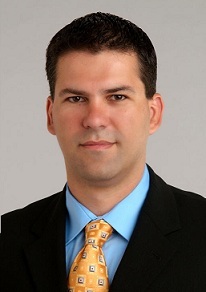
Euan Davis is a great friend of mine since university days, whom I coerced into the analyst industry in 1996 – and he still hasn’t forgiven me. After a five-year spell at IDC where he cut his teeth on European services (he also set up their Spanish services market coverage from their Madrid office), he went onto lead Yankee Group’s European IT/BPO research before an excellent five years at Forrester Research, where he has cemented his reputation as Europe’s premier – and most prolific – analyst covering services markets. He once even guested here.
Now he’s coming back for his revenge as Research Vice President for HfS, fulfilling a global analyst role for HfS, in addition to spearheading our European research practice. We’ll be rolling out our beefed-up research agenda very shortly that will include much of Euan’s planned research.
In his spare time, Euan is a formidable skier, retired party animal, father of Rosa and Oliver with his long-time partner Hannah. He’s also based in Cambridge, UK, about a mile from my parents house…
You can reach Euan at euan dot davis at horsesforsources dot com – but he doesn’t start until 20th September, so don’t expect a rapid response.
Esteban Herrera to join HfS as Research VP, Enterprise Strategic Sourcing Practice
These are exciting times for HfS as we expand our global remit to build out an analyst team with a powerful combination of research skills and real life “feet on the street” outsourcing experience.
Since we launched HfS six months’ ago, our prime area of focus for business growth has been with the buy-side practitioner who needs solid, expert advice on how to tackle outsourcing, which service providers they should evaluate, and how to find “new thresholds of performance” once they’ve moved into an outsourcing end-state. They want us at the end of a phone, to turn up for workshops, to distill data and explain what this all means to them, and validate what they should do next.
We are delighted to announce that one of the most highly-respected (and popular) outsourcing advisors has decided to make the career switch from consultant to analyst and join HfS to head up our buy-side sourcing strategies practice. No more endless billable hours trudging hallways in enterprises labelled as the “outsourcing guy”, Esteban Herrera can now give HfS clients the real deal based on his years of vast experience, where he has lived and breathed every aspect of the complex outsourcing environment.
Esteban joins the HfS executive management team as Research Vice President for the firm’s strategic sourcing practice for buy-side enterprises. Herrera will drive a definitive research agenda that encompasses strategic advice, best practices and governance support across all aspects of IT outsourcing, BPO and shared services.
He joins HfS from leading outsourcing consultancy Alsbridge, where he served as Managing Director, overseeing several major ITO and BPO contract negotiations and strategy endeavors with global enterprises. Prior to Alsbridge, he served as President of NovaSphere Group, and an Executive Vice President at The Concours Group, where he led both the Sourcing Advisory Services and Global Shared Services practices. He has also held executive positions with both Infosys and Accenture, where he managed large global delivery P&Ls. Today he is a recognized thought-leader on outsourcing strategy and highly sought-after by clients needing expert advice.
Herrera brings deep international experience to HfS clients, having lived and worked in four continents. He is fluent in English, Spanish and Portuguese. He also co-authored the influential book “Outsourcing: The Definitive Point of View, Applications and Implications”, and led the landmark Research “Life After Outsourcing”, which was the first to focus on the behaviors and processes that can make or break outsourcing success.
Esteban is also a prolific blogger and writer – a great table-stake for life on this side of the fence. Now he has sold his Porsche, his chief pastimes involve his wife, Patricia, and baby son Lucas, and when he’s not wasting his time watching the Dallas Maverick’s he can be found tuning into the Speed channel to watch Formula 1 motor racing.
We’re delighted to have him start with us shortly – and you can reach him at esteban dot herrera at horsesforsources dot com.
Esteban Herrera: Research VP for HfS' buy-side enterprise sourcing practice
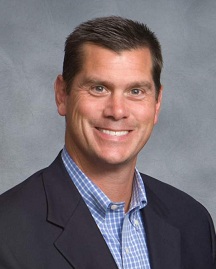
So while we’re busily creating more employment onshore, one of our new recruits, Mr Esteban Herrera, has already been found guilty of submitting us a headshot that makes him look about 18. So we’re delighted to present the young gentelman looking a little more like his true age of 35 – which is still pretty young, but getting nearer that “you should be a home with your pipe and slippers” stage in life. And here he is to explain why exactly he made the move to the orange side…
Hello everyone! I’ve been anxiously waiting the moment I could address the Horses readership from the “inside.” I’d been an advisor for the last ten years, so this move was deliberately considered—I was just getting good at what I used to do! Yet no career change has ever felt so right. Now that moment is here, I thought I would start with sharing some of the many reasons I am so excited to be where I am:
1. The outsourcing industry as a whole has grown stale and it needs innovative delivery models and deal structures to realize its potential. Nobody is truly addressing the dissatisfaction that colors so many outsourcing relationships, but HfS will.
2. HfS is a unique and timely platform from which to influence the entire industry—how much more exciting could it get (for an outsourcing geek)?
3. As a committed globalist, I am thrilled with the global nature of this community, and I believe that learning to do business (well) across geographies, regions, and cultures will be my generation’s lasting legacy. HfS gets this—I am not sure that others do.
4. I believe the “traditional” outsourcing advisory model is fundamentally broken and will not last as currently configured. HfS offers me and my (hopefully plentiful) future clients a new and improved way to add value.
5. I get to join my good friend and blogging hero Phil Fersht, and the brilliant team he has built (in no time flat, in case you did not notice), on the professional adventure of a lifetime.
I could go on, but I’ll be exploring these and other topics soon and there’s no sense in boring you, our loyal “reader”, right off the bat. The quotes around “reader” signal what makes this company different and special—we actually don’t have readers, we have a dialog of some of the best outsourcing minds from all sides of the industry. With your permission, I’m ready to throw myself into the conversation.
Horses for Sources and the London School of Economics to collaborate
Folks – we’re delighted to announce that today we launched a groundbreaking study, in collaboration with our friends at Outsourcing Unit at the London School of Economics, to gain real insight into how business plan to adoption Cloud Business Services.
When we spent time with Professor Leslie Willcocks and Dr Will Venters to discuss their research work with CERN and it’s parallels with a Cloud business environment (see our recent blog interview), we realized the industry was in dire need of a definitive study that looks at how Cloud computing will impact the future of work for both business and IT professionals.
Key dynamics being surveyed will include those aspects of Cloud that appeal to both business and IT professionals, inhibitors that are holding back adoption, current intentions and future plans, intended use of third party service providers and consultants, and determination of specific organization functions where Cloud will have the most impact.
Professor Leslie Willcocks, The London School of Economics
Professor Leslie Willcocks (pictured), Professor of Technology Work and Globalisation at the LSE, and renowned expert and author on global outsourcing and technology dynamics, is leading the initiative for the LSE. He added, “In our 2002 book Netsourcing, we predicted a strong move towards renting applications, services and infrastructure over the Net. It seemed to peter out with the bursting of the e-business bubble but in fact we are now witnessing the ten year convergence of streams of technology and capability that pose the question: how do we leverage this strategically for business advantage? That is one thing we want to investigate. The other is the longer game – is this going to be a dominant trend, the only game in town, or, if not, what sort of hybrid futures are likely?”
CEO of HfS Research, Phil Fersht, who will co-lead study, commented, “There’s been so much noise focused on the technology implications of Cloud, and not enough attention placed on how business executives intend to apply Cloud services within their own business environments. At the end of the day, some firms will succeed in driving down IT infrastructure costs using Cloud models, but the real momentum will come from the business processes that can be delivered to organizations that have all the associated application workflow and infrastructure already provisioned in the Cloud. This study will be the first in industry to draw out these dynamics to help us visualize the future of work.”
HfS is inviting readers to take 10 minutes to complete our online survey. Respondents will receive a report on the report findings, co-written by both HfS Research and the LSE study teams.
Mike Salvino, Group Chief Executive for Business Process Outsourcing, Accenture
One of the great double-acts in the early years of the BPO business was always the Kevin Campbell and Mike Salvino show (read our interview from last year). …And it still is!
Not too many people have been on the front lines of the BPO business since the very early days (remember Exult, anyone?), so it was no surprise when Kevin yanked Mike out of Hewitt Associates in 2006 to have him join him at the helm of Accenture’s outsourcing business.
Now, neither of these guys are your typical silky-smooth Savile Row-clad consulting partners – they’re wholesomely direct and open about the trials and tribulations of succeeding in a very complex global environment. Their impact on Accenture is notable – not only among many industry observers, but also many of their clients.
Mike Salvino – or simply “Sal” to his friends and colleagues, has brought a real air or pragmatism to Accenture, where he now leads the firm’s global BPO business. And while everyone else was getting carried away with mixing Cloud computing with nanotechnology (at a recent analyst meet), Mike’s response was simply “well, how about those clients who are just trying to get some results out of their business process deal today”. I realized, then, it was high-time to have Mike on here to grace us with his views of the real world, and he kindly ducked away from his son’s basketball practice to spend some time with us…
Phil Fersht: Mike, since you’ve been on the front lines of the BPO industry from the early days in the 90’s, how do you think things have changed in the last decade? What’s different today compared to 10 years ago?
Mike Salvino: Let’s look at this across a number of different factors. If you dial the clock back 10 years, BPO was about pure cost savings and non-core transaction activities. So in 2000, clients were supposed to define what was core to their businesses and then get rid of everything that was non-core. In the early days of HR BPO I remember having debates that there was no way service providers could do things like recruiting, learning or even expatriate administration because clients viewed those processes as core and would never want to give them up.
The early deal shapes were around having the service provider take on people from the client and try to scale them, versus leveraging the provider’s assets for the client’s benefit. From a geographic standpoint, it was unheard of to have processes delivered from India, the Philippines or Eastern Europe. People wanted to keep their processes close, and were mostly just trying to get it right using onshore resources.
Moving the clock ahead 10 years…any time I see a “take the people”-type deal, I see a red flag. If a provider is pursuing this type of engagement, it is either just trying to get the business or flat-out doesn’t have the capability to do it — and it’s really hard to win business-wise doing those types of deals. The major players in the BPO industry are not taking on large numbers of people from clients.
In addition, BPO providers have proven they have moved beyond the “core vs. non-core” categorization as we’ve been able to push our offerings all the way into the front office. A great example is Navitaire, Accenture’s wholly owned subsidiary for the airline industry. Through Navitaire, our robust solutions are providing the leading edge to nearly every phase of low-cost airline industry. We’re the back office for these airlines. We’re their middle office, which is the scheduling of flight crews and planes from end-to-end. And we’re their front office, running their reservations, ticketing and customer loyalty systems. Ten years ago this would have been unheard of. Now, people are more attuned to looking at these kinds of processes if somebody else has a better mousetrap.
Finally, this is now clearly a global business. Back in 2000, I wasn’t sure how global it was ever going to be. Was BPO just about taking people from a client and going to a different location in the same city? Or could you get leverage and scale and do it globally? In 2000 “following the sun” meant that we could do the work for our client before our client woke up, depending on where the client was. Now with a global footprint, we can literally move the work around the world as we need to. We clearly do this today while before it was just a concept.
Phil Fersht: So now, at present day coming off the recession, we seem to be moving into a new era where some of the deals are getting smaller, more incremental. A lot of clients seem to want to move piece by piece rather than the whole ship at once. How are you seeing the landscape changing?
Mike Salvino: I think things went a little over-the-top before the recession. Billion dollar deals were being done and we are just not seeing that right now. Today it’s all about the client’s business case, the dollars and cents. We can choose any process we want as long as we can show a business case. Then, obviously, if we show a business case, we need to follow up with the delivery capabilities and referenceable clients. This makes it hard to get into potential new areas, but some clients are very focused on what they want us to deliver to them. So they are willing to go into those new areas, such as clinical-data management or engineering services, processes you could say are going to be the core of BPO. Whatever the process, clients want us to help define the business case, and then they want us to put skin in the game around delivering on that business case. And that’s fine, because I think they are clearly separating the pretenders from the real contenders.
We do see the deals getting smaller, but we also see the deals being more bundled in terms of F&A, procurement, sourcing and even some HR. We also see them more bundled with IT. But we’re seeing clients more frequently wanting to first do a “pilot”, and then scale from there.
Phil Fersht: Accenture has made a lot of noise in recent talks around bundling processes across towers. You mentioned you’ve been doing deals where you’ve seen alignment among procurement, F&A and bits of HR. Do you see this mixed bag continuing to proliferate? How is that developing?
Mike Salvino: It’s not developing the way we once thought it might. Before the downturn, we felt we could do bigger deals by bundling all the services together at the outset. But what we are seeing is, if we successfully deliver F&A for a client, it gives us the door to swim upstream into procurement and extend that into an F&A and procurement deal. Then, if we’re good at doing the procurement, it allows us to get into the sourcing strategies, which then allows us to get into the demand forecasting and demand generation areas.
Bundling is happening, but over an extended period of time. We are not going in with a huge bundled deal with all these processes at one time. What we’ve seen over the last 18 to 24 months is many of our new bookings are extensions. Extensions are not just expanding the existing work, but instead extending our clients into new work. So for example, we are Microsoft’s back office. We are touching HR, we are touching procurement, we are touching F&A and we’ve done that over the course of four years. But you aren’t really seeing RFPs hit the street for everything under the sun, unless it’s someone trying to sell its captive operations.
Phil Fersht: We’re hearing a lot of noise, particularly from the ITO sector, on developing BPO competency around these IT/BPO synergies. We’re certainly seeing them in vertical areas, like your Navitaire example. How are you seeing this coming together of technology-enabled BPO? Is it more hype because you’ve got IT services companies trying to develop pockets of BPO, or do you generally see this as a way solutions are going to develop in the future?
Mike Salvino: I think it’s real. It’s hard to ignore, because we have existing IT and people are buying new ways to deal with that IT. Then you’ve got newer technology coming down the pipe…cloud, analytics, mobility. We have to figure out how that’s going to affect BPO and whether or not it’s going to be another game changer. But no matter which direction the IT companies go, they still have to process transactions. You can’t be in this business without processing transactions.
BPO companies know how to process transactions, and are trying to apply technology to those processes. But some of the IT companies are saying, “We have technology and are trying to get it into the BPO business. We can naturally jump into BPO.” However, it’s not that easy. If you don’t have the processing knowledge, it’s very hard to figure out how you’re going to make the technology work. I think the biggest effect on the industry from a technology standpoint is as much about the cloud and mobility as it is about analytics. Most people continue to talk about analytics, which is important, but cloud and mobility could change the whole game.
In Part II, we’ll ask Mike about his view on the future direction of the industry and the emergence of industry-focused offerings and Cloud Business Services
Mike Salvino (pictured) is Group Chief Executive for Business Process Outsourcing at Accenture. He is responsible for the firm’s BPO growth platform, and its comprehensive portfolio of cross-industry and industry-specific business process outsourcing (BPO) services globally. He rejoined Accenture in 2006 from Hewitt, where he served as global sales and accounts co-leader for Hewitt’s HR outsourcing group. He also served as president of the Americas region for Exult Inc., responsible for the company’s business in the United States, Canada and Latin America, prior to that company’s acquisition by Hewitt. You can access his full bio here.
Lots of frantic noise this week that Cog has been making romantic overtones to Genpact – with India’s press jumping on “speculation“.
Like any other industry observer, you can certainly see lots of romantic potential here – Wall Street’s darlings of BPO and ADM tying the knot to frighten the life out of Accenture, IBM, Infosys et al. However, while its seems like Brad and Angie Part II, I’m afraid this one just ain’t gonna happen anytime soon. And if it does, I will personally send a box of chocolates to Senator Schumer.
Here’s why this is highly unlikely:
Industry media is bored and yearns for big M&A across the new breed of services providers, but they’re not (quite) ready. Everyone’s been predicting major M&A for the last couple of years, but it’s only really happening in very mature industries (for example payroll and benefits administration) or with companies that have been around for many years and need to be acquired to have them broken up and re-balanced (i.e. Perot Systems, EDS etc.). Firms such as Cognizant and Genpact have been on such a high growth trajectory these past 3-4 years, they’re simply not ready to drive such a thunderbolt of disruption into their business operations. We’ll need to observe a significant slowdown of growth for at least two consecutive quarters, before mergers of this magnitude will be entertained by the leading offshore providers.
Both Genpact and Cognizant have been developing their own unique cultures and brands – merging them now is risky. The speed of development of these firms has been staggering, and much of the energy behind this, has been the unique cultures created by dynamic leadership of taking the offshore model to the global enterprise. The management style required to lead a BPO business is also different from ITO – the margins are often tighter, the skills needed to run certain processes often harder to attract, develop, train and cross-train. Taking a unique BPO culture and trying to shoe-horn it into a dynamic ITO culture could very quickly derail a secret sauce that took years to develop.
General Electric is an unlikely proposition for Cognizant to take-on. GE still dominates 40% of Genpact’s business (see earlier post), and Cognizant is unlikely to see major growth potential in this client. It also has a reputation for being a tough one to ingest.
The Indian-centric providers are more focused on cash-based “tuck-in” acquisitions. For several years, the leading Indian-centric providers have been looking at acquisitions that tend to be largely cash-based, relatively inexpensive, and ones they can pick up and grow with their scale-model. For example, InfosysBPO recently acquired the McCamish insurance platform, whereby it could look to turn $1m insurance clients into $50m clients with its BPO scale. Cognizant picked up the UBS Indian captive where it could start to develop BPO/KPO client opportunities based on the niche capabilities it had acquired. Genpact is frequently picking up niche deals that adds piecemeal process competencies. If these firms wanted to buy big, they’d need to entertain stock-based acquisitions, as once they shell out a few hundred million of their cash on one or two larger acquisitions, that money’s gone, and so does their room for future strategic investments.
The more likely M&A will be between a Cowboy and an Indian. As discussed here recently, the more likely M&A in the ITO/BPO industry will come from Western providers and Indian providers coming together, in order to benefit from each other’s competencies and cultures. And this could take many shapes or forms – there is no set way for providers to develop their solutions with the onset of Cloud computing, hybrid sourcing models and verticalization of IT/BPO solutions. Genpact is a highly attractive proposition for many Western firms seeking to take a market leadership position in BPO. And who would discount one company from Redwood shores with the reputation of making bold acquisitive moves, in casting its greedy eyes at the subcontinent?
The global insurance industry faces a challenging and unprecedented market environment; insurance premiums are falling, and insurance firms’ profitability is nowhere near the pre-recession era. Added to this, insurers in the US and Europe need to battle several regulatory and compliance requirements in the next few years.
The US healthcare reform calls for innovation in risk/price modeling for insurers who will cater to whole new segments of customers in 2014. Similarly, the Solvency II regime has brought risk management and disclosure to the forefront of the European insurance industry.
Compliance is already driving up documentation and administrative workload, and there is a shortage of risk analysts and actuaries to take on the higher level work. Insurers now have an urgent need to manage enterprise risk by harmonizing market, credit, operations and organizational security. In this scenario, outsourcing of select business processes is a highly viable strategy, as several insurers are discovering today. And expense reduction is only one angle; it is no longer the only important reason driving the insurance segment to outsource.
Providers are now business partners, offering to diagnose current and future resource requirements with a focus on efficiency, not cost arbitrage. Outsourcing is increasingly empowering insurers by integrating and transforming processes, tools, technology, as well as risk strategies. These are the major points of discussion we cover in this new HfS Research report, relating to global insurance BPO:
Western Europe and North America make up for more than two-thirds of the insurance market. In terms of outsourcing, while North America is by far the most aggressive, there is now greater traction from the UK and continental European insurers.
Primary insurers make up the majority of offshored business, followed by reinsurance companies and intermediaries.
The selection of processes to offshore is extremely strategic, and depends on the comfort, confidence and outsourcing maturity of each insurer, and their orientation of core and non-core processes.
At the outset, insurance companies were more open to outsourcing simple data entry processing, outbound sales, claims processing, billing and settlement, and policy servicing. Five years ago, the focus was to outsource task-based activities. Insurers are now viewing functional outsourcing as a viable option (e.g., entire claims administration process).
India and the Philippines emerge as the strongest offshore destinations. India will continue to maintain the top spot for the next five to seven years. Certain services within the voice segment are slowly moving to the Philippines, but it is a small component of the growing volumes of offshore business that India is witnessing.
Offshore BPO providers have evolved their insurance practices, and now possess strong domain expertise and technical know-how, coupled with great orientation toward foreign regulatory environments. This has encouraged stronger confidence among overseas clients, and in the last few years, major vendors have slowly moved up the value chain to address opportunities in customer support, underwriting, extensive analytics and actuarial support services.
There is a cautious loosening of purse strings by the insurance carriers this year as they seek solutions which will help augment their top-line and improve their bottom-line as well. Providers are seeing a renewed vigor by insurers, to bring about business process efficiencies and seek greater return on investment from their already outsourced engagements.
Insurers face a challenging environment in the coming years. A well-thought out sourcing strategy will serve their efforts of achieving process optimization and tighter efficiency. Even as they seek cost containment to ride out the recovery, insurers need to think long term about the implications of their outsourced work. Insurers would also be well advised to approach their negotiations with vendors with business outcomes in mind, in line with the move towards transaction/outcome based pricing. With Solvency II requirements being set in place, outsourcing agreements will face stringent supervision and review. European insurers need to prepare their internal process frameworks post-haste, as outsourcing to external vendors in the future will require a transfer of these controls, while maintaining low risk. Insurers must also engage with vendors that are amenable to audit checks by supervisory committees.
Providers must develop best practices in tandem with the new regulations/legislations, to provide maximum value to clients looking for expertise in their regulatory environments. They also have a strong opportunity to cross-sell high-value services to existing IT/BPO clients. For providers looking to compete for core volume-based BPO services, scale is paramount in the coming years. However, for companies vying for complex high-value services, it is domain expertise over scale that will work in their favor. The shift to knowledge intensive KPO services will entail lower number of transactions, coupled with much higher skill levels of workforce employed. Providers must balance their portfolios to accommodate for the significantly different service strategies.
HfS Research premium subscribers can access our new market landcape on the global insurance BPO industry over at our Published Research section.
Liz Campbell Evans is Managing Director of EquaTerra’s Governance and Transformation Advisory Services
If your outsourcing relationship is on the rocks, one person who can provide some tried-and-trusted therapy is EquaTerra’s Liz Campbell Evans, who actually does outsourcing marriage counselling for a living, running EquaTerra’s transformation and governance practice.
Now Liz is one of those people who just makes us depressed – she’s a triathlete, scuba diver, fluent linguist in both English and American, actually loves her job – and just gave birth to her first baby boy (and still managed to squeeze in this discussion with us). Her only flaw is she actually enjoys intervening in broken outsourcing relationships to earn her bread.
And before we go to the discussion with Liz, we’d like to invite you to meet Liz and the EquaTerra team in my home town of Boston on 14th – 15th October, where you’ll get some serious advice on how to work more effectively with your outsourcing partner. Click here for for details on an excellent agenda and email Alison Norman for more details.
Phil Fersht: Hi Liz – so how, on earth, did you manage to end up in this business as a governance expert?
Liz Campbell Evans: Good question and one a ponder from time to time. I’ve been involved in outsourcing for a number of years now, over thirteen and I soon realized that while the seemingly exciting part of the process was getting to the “deal” the rubber really meets the road post deal. I have spent much of my time in outsourcing focusing on help organization work better together within the boundaries they jointly agreed and established as part of the contract. The frameworks and tools that I use on a day to day base really help to enable effective governance.
Phil Fersht: Is it fun at all, or just lots of stressful clients, and sorting out strained relationships?
Liz Campbell Evans: I’m going to confess it’s great fun, I often describe my job as an opportunity to meet interesting people and help them solve tough problems. No outsourcing relationship is the same, different people involved, with differing experiences and expectations. As you would say, Phil, it’s a case of “horses for courses”! Having the opportunity to realign all of these difference and sometime, opposing perspectives is a challenge, especially to preserve a fair and sustainable way of working together. I also get to work across multiple functions / subject areas, IT, Procurements, F&A etc etc so I get to see how the marketplace is evolving and adapting to changes in deals. Helpful insights when you’re trying to fix things, believe me.
Phil Fersht: On a more serious note, are clients generally getting better at this?
Liz Campbell Evans: I honestly believe people are, mainly due to the focus on and expectation that the signature isn’t the final piece of the jigsaw. Look at any outsourcing conference and you’ll see a Governance or Relationship Management stream which was not the case even 5 years ago. Plus I must give the Service Provider credits, many of the more mature companies have done a good job in developing and refining their message to clients about how things will work, what’s normal, when pains points are likely to occur. As a result I believe that clients are more prepared and more willing to prepare themselves for the additional / new work of managing these agreements.
Phil Fersht: And how to do you typically advise client when it comes to multi-sourcing? When should they use multiple providers, and when’s it better to have a “single throat to choke”?
Liz Campbell Evans: Great question, from a governance perspective I am often told what the situation is, i.e. an organization is going the route of multi-providers. My job and the work many of the EquaTerra governance team is to make that solution successful. I see multi-provider environments commonly in IT. The key is for the clients to understand what they want and expect from each provider and the type of relationship they expect. I truly believe not all relationships are created equal, nor do they need to be for a successful outsourcing portfolio to function and deliver the benefits. Some of the most successful multi-sourcing arrangements are those that follow a specific strategy, often engaging multiple providers at the same time, perhaps in the Applications area. When the contracting is done in parallel there is an opportunity to align objectives and expectations of all parties regarding the interactions, hand-offs etc. However its more common for multi-provider environments to evolve over time, in my experience. They key for organizations engaging in multi-provider environments to know they have more work and more responsibility to ensure the interactions between the providers work effectively. This is a big responsibility and one that honestly a number of organizations do not give enough attention to before the new agreements are signed. So to actually answer your question, any multi-provider situation can be made to work, there is a different level of governance, effort and involvement needed from the client side.
Phil Fersht: How do you see governance models changing in the future?
Liz Campbell Evans: Great question and one I wish I had more time to contemplate. A couple of key changes I do believe will be needed in order to respond to the evolving services available in the outsourcing marketplace. As an example; Cloud computing and Software as a Service are very much commodity services, often associated with transactional types of relationships. Governance models will need to become leaning and adaptable to handle the true differentiation in the types of services being delivered. In today’s IT world (using IT as a good example); much of the outsourcing is a combination of staff augmentation on the applications side and varying degrees of traditional managed service in infrastructure. Introduce Cloud or SaaS and the nature of the interaction with the service provider changes. The time and access to managed, involved on the all service providers in supporting the IT organization plan for future needs etc. It may not be realistic for companies to expect the same levels of involvement and collaboration from all providers – that may not be what companies are paying for.
Phil Fersht: How can buyers get better at governing sourcing relationships? Is there a curriculum they can follow? Or it is more of a “trial by fire” experience for most?
Liz Campbell Evans: Clearly they could call EquaTerra 🙂 Seriously there are a number of key areas which come up time and time again that if done effectively dramatically improve the sourcing relationships;
Get your owner house in order: ensure the client side organization has established where decision making authority lies with regards the new agreement, including issue escalation and resolution. Ensure roles and responsibilities for interfacing with the service provider and providing oversight (governance) are clearly understanding and communicated. Ensure you have the right people in the role governance roles. Not everyone wants to or can be good in governance positions.o Agree governance principles are part of the contracting process: ensure the teams that will be responsible for working together are given the opportunity to consider the governance principles; meetings, roles, communications, processes etc. Agree this up front and include as part of the contract
Give yourself and the service provider the best chance of success: communicate what is and is not part of the agreement and services. Provide training for your team in working with outside provider, how to resolve conflict constructively etc. Take the time and give your team the team they need to adjust and be successful in the new roleso Timing is everything: walk before you can run. Give some thought to how the governance framework, new roles, processes etc are rolled out to compliment the transition process rather than confuse and things. There needs to be clarify in how transition will be governed and managed and how the ongoing relationship will be managed. Recognize these are two distinct phases of the relationship and organizations will be able to leverage their provider experience, communicate to the organization and governance effectively.
Phil Fersht: What has been the most successful governance experience you’ve had, and the least?
Liz Campbell Evans: I think this may sound a little basic, but honestly companies that invest the time to think about how they want to work with their outsourcer and implement a practical governance structure which they sustain are the most successful. Not all governance roles and structure look the same and it’s important for companies to design and implement governance that really fits in with their culture (not too grand such that it can’t be sustained from a time or financial commitment perspective. One organization I have the opportunity to work with on an ongoing basis keeps a keen interest (and continues to do so) in having external validation that their governance structure and relationship with the service provider is fit for purpose and maturing. They invest the time jointly with the Service Provider to annually review the way in which they are working together. As a result they develop action plans with jointly agreed improvement opportunities and target timelines for delivery.· I’ve worked with a number of companies that do not give their outsourcing agreements and relationships the “care and feeding” needed to be successful. Outsourcing relationships are to some extent are like an expensive car; you would not buy a brand new car, drive it off the sales lot and never take it for a service, or oil change or use the owner’s manual, or clean / wash the car.
Phil Fersht: And finally, will you be nurturing your forthcoming child to follow in your footsteps, or would you prefer he or she focused on another profession?
Liz Campbell Evans: At this stage with a 3 week old baby I am absolutely in the “care and feeding” stage – and lots of it 🙂 As for my little guy’s future career, who knows what the future holds. No early signs of preference at this stage other than potentially a food critic 🙂
Phil Fersht: Liz – congratulations on your new baby, and thanks for spending time with our readers this morning. See you in Boston!
As managing director of EquaTerra’s Governance and Transformation Advisory Services, Liz has more than a decade of experience working closely with organizations to establish appropriate governance mechanisms designed to ensure success in the management of long-term outsourcing relationships. In addition, she has led multiple transition initiatives, including global implementation. You can reach her at liz dot campbell at equaterra dot com.
Esteban Herrera: Research VP for HfS' buy-side enteprise sourcing practice
One element of sourcing which constantly baffles me, is the inability of firms to be open about why they’re doing it.
If I have a dollar for every outsourcing engagement which was decided purely on price, with a “nod and a wink” for the innovation that was going to be achieved in the future, I would be, well, about a grand better off! Our new enterprise sourcing dynamo, Esteban Herrera, expands further…
The expression barrier in outsourcing
Almost a decade ago, I had the honor of doing some research with MIT Sloan’s Peter Weill, one of the most influential voices in IT management in the world. Over the course of that project, I became exposed to many of Peter’s concepts, and I remember one in particular, which he called the expression barrier. I could never do it justice, but what I recall is that IT customers aren’t particularly good at telling their IT organizations what they need; and even when they do, IT organizations aren’t particularly well equipped to interpret it.
This should ring a bell for anyone who has ever tried to build, manage, or repair an outsourcing relationship. I think the expression barrier in outsourcing is a) even more prevalent than in IT and b) even more serious, as any breakdown occurs across enterprise boundaries rather than within them.
It starts during the sales cycle: If I had a dollar for every past client who declared that “price cannot or will not be the deciding factor” and then proceeded to make their decision almost entirely on price, I would have many, many more dollars. Providers, of course, have figured this out, and greet such statements with great skepticism borne from real and painful experience. The result, then, is that often when a client legitimately will pay more for a higher standard, they still don’t get it because their deal was built on price out of fear that anything different was a losing proposition.
When establishing the new relationship, the parties tend to be careful and courteous with each other. This is the wrong time for manners. In my first year of marriage, my wife was extraordinarily forceful in the correction of some of my bad habits. Alas, the ones I successfully hid during that period have proven far more challenging for her to rectify. Outsourcing “marriages” aren’t very different: yes, you will hurt someone’s feelings even if all you are criticizing is their work, but better early than late. Providers tend to want to protect the relationship and say “yes” to a whole lot of things that they weren’t expecting to have to do. Soon, this behavior becomes economically unsustainable and as it begins to change the client’s frustration tends to build.
Even in established relationships with a good track record one can see evidence of the expression barrier. I remember being close to some mature F&A deals as Sarbanes-Oxley became law. Clients got together in conference rooms and interpreted the requirements. Meanwhile, in a similar conference room but in another part of the world, their providers did the same. The work was performed, and client’s routinely sent it back as “non-compliant.” Not surprising, and the two groups had never agreed on what “compliant” meant.
The expression barrier shows up in every relationship almost every day—and it is actually fairly easy to diagnose. An outsider will typically see it within minutes of observation. The cure, however, is elusive. If we could solve it, we could make a world of difference in this industry. It seems like it should be as simple as “Say what you mean!” but after ten years of trying that, I’m ready for a new approach. How about we start the discussion right here, on the Horses for Sources blog?