Waking up this morning to hear the news of Hewitt’s acquisition by AON signalled a sad, bad day for HR Outsourcing.
The HRO industry is now consolidating faster than any of us imagined… forget ADP/Workscape, this is BIG – and leaves the global HRO market with three major global HRO enterprise-level providers – IBM, NGA and Xerox (ACS). While there were some positive synergies with NGA / Convergys to create a global provider, Xerox / ACS was an odd match of two very different cultures and providers, and AON/Hewitt isn’t far off in terms of a weird fit.
I am concerned with the impact on Hewitt’s culture and brand, which is steeped in HR consulting culture over four decades. While, on paper, we can see some minor synergies, in terms of scale, geographic presence and financial offerings, you have to question two very different cultures and the potential impact on Hewitt’s consulting and managed services offerings, once the AON corporate machine gets its claws in.
Hewitt needed to be acquired by a true enterprise global provider with real HR heritage, and global HR offerings (especially pan-Europe). Moreover, a provider with deep technology integration expertise would have been hugely beneficial. AON will not provide that, unless it hasn’t finished its shopping excursion. Let’s hope AON’s leadership has learned from it’s earlier foray into multi-process HRO, which netted the firm a solitary client (AT&T) and an IT-integration partnership with CSC that achieved little, before beating a hasty retreat.
This time, AON needs to figure out its HR technology services strategy – there are several willing partipants out there, with real HRIT acumen (for example Deloitte may be looking at new HRO partners since Convergys’ HRO business was acquired), and there are several Indian providers with deepening HRIT capabilities (Infosys, TCS and Wipro all have developing practices).
Maybe this will provide the impetus for Accenture to make a renewed push into the market, with so much open space being created? It’s deep HR transformation experience, HRIT and HRO client engagement experience, put it in a strong position to up the ante – and we’ve see it winning some deals of late. Let’s hope so – the industry needs to be competitive and we are quickly reaching a situation where clients have limited choice.
Contrary to rumor, analysts sometimes do more than get themselves inebriated at industry boondoggles (hmmm….). And as much as we’d all like to spend our days being wined and dined at tennis tournaments and totting up our Starwoods points, we’ve had to knuckle-down and put pen to paper with our views and insights on where this market is heading.
We tried to explain to our sales chappy that clients don’t care about research anymore, that they just wanted to hang out with us, but he wouldn’t listen, signed up a bunch of them, and now we have to do some hard work.
So four months on, and we’re beginning to sneak a few publications out to market. We’re developing a fully-fledged research agenda which we will be excited to announce in September, when we will also be announcing the arrival of some new analysts (who also claim they will write some stuff). So feel free to visit our sexy (ahem) new RESEARCH LIBRARY and check out what we’re writing about.
Some stuff is freemium (I love that word), and some is premium for our subscribers, but there is plenty there for all to read, that is being regularly updated with new publications. So spend a few minutes registering an ID and password with us, and enter our research world. C’mon… do you have any better offers on a Thursday morning?
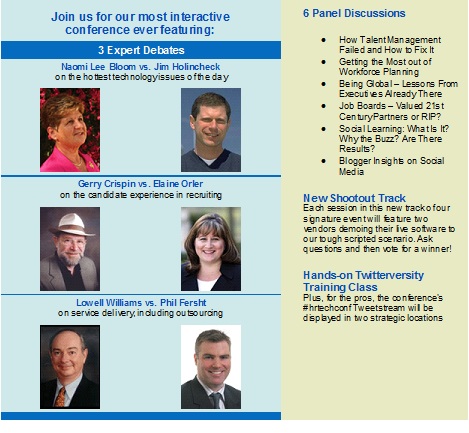
Anyone in the HR industry knows the best show of the year – and always the most entertaining – is the HR Technology conference in Chicago each September. And this year’s effort promises to be the best so far.
And this year it’s got the whole gamut: big HR practitioners, big bloggers, big analysts, big technology vendors and big outsourcers. And as most of my friends know – I’m being particularly choosy this year attending these types of events, now I’m chained to my desk actually doing some research, but the lure of the maddest, raddest HR shindig has proved too much this time. Why not join us? We’ve even got them to agree to a whopping $500 discount for HfS subscribers: simply REGISTER HERE and use the code HORSES10 (case sensitive).
You’d have thought, having an analyst in Australia, we’d get contributions such as “How to outsource all your work and spend all day on the beach”, or “Precautions to avoid business failure now the local pub has WiFi”.
But no. What do we get? Endless reams of insight on the Cloud – I didn’t think they had Clouds over there? All jesting aside, Andrew Milroy poses some profound challenges for software giant Microsoft, which may be set to miss out with Cloud computing in a similar vein to its struggles with internet search market and mobility…
A Cloudy Future for Microsoft?
Microsoft urgently needs to address its approach to Cloud Computing, together with the closely related tablet and smart phone markets, if it wants to avoid falling further behind the likes of Google and Apple in these interrelated markets.
At the turn of the 21st century, Microsoft’s position as the world’s largest, most dominant, and most influential IT vendor seemed unassailable. In recent years, however, there have been seismic shifts in the IT industry, much of which has been driven by two companies, Google and Apple. Both are massively disrupting Microsoft’s traditional business model. These shifts have been centred on a move away from on-premise models of computing, towards a model where data and other computing resources reside offsite, or in the Cloud.
Google generates revenues from advertising so has been in a position to offer software that competes directly with Microsoft products, free of charge, while driving the Cloud computing model.
Apple has been leading the development of smart phones and tablet computers which are undermining the dominance of PCs and further driving the Cloud Computing model.
These developments are being compounded by a shift away from Microsoft’s operating systems towards Open Source alternatives.
The shift towards the Cloud model is now taking place at breakneck speed, and is threatening to choke revenue streams that are dependent on selling software licenses. Frost & Sullivan estimates that the market for public Cloud computing will grow at a compound annual growth rate of just over 40% between 2009 and 2014 – while Gartner and Forrester both come up with similar forecasts.
In the short term, we will be working within hybrid computing environments, consisting of both Cloud computing and traditional models of computing, but the Cloud model will dominate in the next few years. Soon, managers will need to present very strong business cases to justify the expense of keeping computing resources on-premise.
Microsoft’s two key competitors have Cloud-based business models and lots of cash.
Google has only ever had a Cloud-based business model. Apple, on the other hand, has brilliantly made the transition from an ailing desktop-oriented IT supplier to a cash generating machine, by fully capitalizing on technology shifts. Its iTunes business is a Cloud business and its iPhones and iPads have driven the development of a huge number of Cloud-based applications. The tablet computing market that Apple has pioneered, will speed up the demise of PCs. Where is Microsoft in this market?
Right now, the market is dominated by Apple and Google. A rapidly growing number of Android devices are appearing on the market and taking on Apple’s iPhone and iPad products. It is reminiscent of the battle between Apple and Microsoft in the early days of the PC. Apple had a ‘walled garden’ strategy. Its software ran only on its hardware. Microsoft, on the other hand, licensed its software to run on PCs produced by anyone. Microsoft’s Windows Phone/Slate 7 is expected to provide competition but, the market is growing very fast without Microsoft’s product having been released. Has Microsoft been too slow this time? Will Windows Phone/Slate 7 be well received or will it be considered to be a sluggish and unreliable product? Does the product name suggest that Microsoft has not recognised or anticipated the growth in tablet computing and its impact on Cloud computing? Is Microsoft designing its mobile/tablet products specifically for these new environments or is it merely re-coding its existing PC oriented products?
To be fair, Microsoft now offers Cloud products. Its applications can now be offered over the Cloud and its price competitive, platform as a service (PaaS) product, Azure, creates a development environment that is simple to get to grips with for those that are used to working with Microsoft products. This, of course, represents most developers. Microsoft seems to be banking on developers believing that it is simpler to stick with Microsoft, with whom they are familiar, as they move into the Cloud, rather than using products from Cloud, pure play, suppliers of PaaS products like Amazon, Google and Salesforce.com.
Microsoft’s current approach is to ensure that it can offer Cloud services to its customers if customers seek these solutions. In doing so, it is shifting substantial numbers of its customers into the Cloud and it has been working closely with its partners to support these efforts. But, is it working hard enough to move its customers into the Cloud? Has it anticipated the huge growth of Cloud computing?
Andrew Milroy, Expert Contributor, Asia/Pacific Sourcing Strategies, HfS Research
Has it created sufficiently attractive sales incentives to encourage sales teams and partners to sell Cloud services instead of on-premise alternatives? In order to enjoy success, Microsoft must proactively ensure that its Cloud offerings become embedded within the world’s leading corporations before its competitors, as it did in the PC-oriented world. If it does not do this, it risks losing its very strong, but no longer dominant position in the IT industry.
Microsoft needs to improve its speed to market with new products. It needs to act faster than it has ever acted before and it needs to do this now.
Andy Milroy, pictured right, is Expert Contributor for Horses for Sources Research. You can access his bio here. He likes to be tweeted at @andy1994
Check out who’s at 15th in the latest analyst “power rankings” by ARInsights, a dynamic content rich database that contains comprehensive information on 5,511 analysts from 694 different firms.
While our aim is (ahem) to be number one, for an analyst firm that’s been in existence barely 4 months and competes with billion-dollar competitors, we’ll take it. And Ray Wang of fellow analyst newbies Altimeter Group made the top-ten. Maybe says something about the power of social media? Hmmmm…
ARchitect™ Power 100 analysts, 19th June 2010
The top 100 analysts ranked according to their activity level among all ARchitect™ users. These are the analysts with the most sustained “buzz” in the industry right now:
1 Allie Young Gartner Inc.
2 Eric Goodness Gartner Inc.
3 Alex Soejarto Gartner Inc.
4 Pascal Matzke Forrester Research, Inc.
5 Dane S. Anderson Gartner Inc.
6 Kimberly Harris-Ferrante Gartner Inc.
7 Brian Partridge Yankee Group
8 Rona Shuchat IDC
9 R Wang Altimeter Group
10 Susan Tan Gartner Inc.
11 William Martorelli Forrester Research, Inc.
12 Ken L. Dulaney Gartner Inc.
13 Matthew Goldman Gartner Inc.
14 Mike Cansfield Forrester Research, Inc.
15 Philip Fersht Horses for Sources
16 Sudin Apte Forrester Research, Inc.
17 Khalid Kark Forrester Research, Inc.
18 Elisabeth Rainge IDC
19 Frank E. Gillett Forrester Research, Inc.
20 Norbert J. Scholz Gartner Inc.
21 Ronni J. Colville Gartner Inc.
22 Frank Ridder Gartner Inc.
23 Euan Davis Forrester Research, Inc.
24 Arindam Banerjee Heavy Reading
25 Richard T. Matlus Gartner Inc.
26 Milind Govekar Gartner Inc.
27 Karl Whitelock Stratecast Partners
28 Ellen Daley Forrester Research, Inc.
29 Michele Pelino Forrester Research, Inc.
30 Liz Herbert Forrester Research, Inc.
31 Daniel O’Connell Gartner Inc.
32 Lydia Leong Gartner Inc.
33 Phil Sayer Forrester Research, Inc.
34 Chris Wolf Burton Group
35 Jonathan Penn Forrester Research, Inc.
36 Benjamin Gray Forrester Research, Inc.
37 James Staten Forrester Research, Inc.
38 Bhavish Sood Gartner Inc.
39 Frances Karamouzis Gartner Inc.
40 Peter Jarich Current Analysis, Inc.
41 Christopher Andrews Forrester Research, Inc.
42 John Madden Ovum Summit
43 Michele Cantara Gartner Inc.
44 Roger L. Kay Endpoint Technologies Associates, Inc.
45 Neil Chandler Gartner Inc.
46 Camille Mendler Yankee Group
47 Bob Hafner Gartner Inc.
48 Shira Levine Infonetics Research
49 Michael von Uechtritz Gartner Inc.
50 Rachael Stormonth NelsonHall
51 Cornelia Wels-Maug Ovum
52 Ali Zaidi IDC
53 Henry Dewing Forrester Research, Inc.
54 Sebastien A. Ruest IDC
55 Joe Barkai Manufacturing Insights
56 Martina Kurth Gartner Inc.
57 Jouni Forsman Gartner Inc.
58 Kevin Lucas Forrester Research, Inc.
59 Ted Friedman Gartner Inc.
60 Ben Pring Gartner Inc.
61 Christine Tenneson Gartner Inc.
62 Andras Cser Forrester Research, Inc.
63 Mark Schrutt IDC
64 Dana Stiffler AMR Research
65 Timothy Zimmerman Gartner Inc.
66 Gianluca Tramacere Gartner Inc.
67 Rob Enderle Enderle Group
68 John C. McCarthy Forrester Research, Inc.
69 Martin Reynolds Gartner Inc.
70 Rishi Sood Gartner Inc.
71 Jean S. Bozman IDC
72 Alexander Simkin Ovum
73 Bern M. Elliot Gartner Inc.
74 Peter Mottishaw Analysys Mason
75 Kelly M. Kavanagh Gartner Inc.
76 Andrew Butler Gartner Inc.
77 Mike Sapien Ovum
78 William Stofega IDC
79 Jim Duggan Gartner Inc.
80 Dominique Raviart NelsonHall
81 Katja Ruud Gartner Inc.
82 Susan McNeice Yankee Group
83 Simon Mingay Gartner Inc.
84 Zeus Kerravala Yankee Group
85 James G. Kobielus Forrester Research, Inc.
86 Andrew White Gartner Inc.
87 John-David Lovelock Gartner Inc.
88 Chris Barnard IDC
89 Gareth Herschel Gartner Inc.
90 Mark A. Margevicius Gartner Inc.
91 Jon Peddie Jon Peddie Research
92 Richard L. Villars IDC
93 Rodney Nelsestuen TowerGroup
94 Evelyn Hubbert Forrester Research, Inc.
An HfS analyst spotted earlier prepping for his next Rapid Insight…
Innovation is now the critical ingredient for most buyers of Business Process Outsourcing (BPO) services –unequivocally proven by a new HfS Research study of 588 shared services and outsourcing executives, as revealed in our new report Desperately Seeking Innovation in Business Process Outsourcing: Enterprises Speak Out.
Most buyers of BPO services are initially delighted when they trim 30% of their costs on one process, and 50% on another, but once those costs disappear from the balance sheet, they are quickly looking at new initiatives to help them attain new thresholds of productivity or revenue growth: what HfS Research terms as “innovation”.
Moreover, while half of buyers are dissatisfied with the innovation they are currently achieving from their BPO endeavor, the majority are seeing significant potential to achieve it across certain processes within a two-year time-frame.
Essentially, once they have out-tasked as much of the feasible routine administrative work to service providers, they quickly discover that next tranche of productivity is not nearly as straightforward as documenting standard processes and training an offshore team to replicate them effectively (commonly termed in the BPO industry as “lift and shift”). Those buyers realize they actually need to introduce new, creative methods to actually change the old way of managing processes to find improvement. This scenario continues to dominate the vast majority of large-scale BPO engagements today.
The answers lie with both BPO buyers and their service providers working together to achieve measurable business outcomes as part of organized and collaborative long-term partnerships. However, too many enterprise buyers jump into a service provider relationship polarized on the initial cost take-out from the “lift and shift”, and gloss-over the future initiatives they will need to implement in a couple of years, when they seek to find new value through better processes, talent and technology.
We believe buyers need to put the innovation track-record of service providers high up the decision-making tree when they select make selection decisions. As earlier HfS Research has demonstrated, service provision is commoditizing and leveling the playing field, with several BPO service providers today pushing services within a similar price-band, and sufficient track record of successful “operational” delivery.
Most large enterprises have already experienced offshoring and outsourcing varying degrees of their operations for several years, and are smart enough to realize outsourcing provides an opportunity to deliver more than simply cost-savings through lower cost labor. Consequently, the ability to provide outcome-based solutions that encompass helping BPO buyers achieve innovation, is fast becoming a crucial differentiator.
We’ll be highlighing more snippets from our new report, entitled “Desperately Seeking Innovation in Business Process Outsourcing: Enterprises Speak Out” this week, but if you can’t wait that long: [emember_protected]click here to download your very own freemium copy[/emember_protected] This report dives into the experiences and expectations of today’s enterprise BPO buyers when it comes to achieving innovation, and offers actionable recommendations for devising a strategy to improve their innovation agenda with their BPO endeavor.
Wendy Shlensky, Analyst Relations at Infosys Technologies
Imagine a job where good work is rarely praised and people can only complain that you somehow messed up?
Imagine a job where you had to spend all your time ensuring industry analysts (whom are all, of course, very nice humble people) had their facts straight and you hoped liked your firm enough to say good things?
Imagine a job where you had to constantly be nice to your executives, to make sure they showed up on time to all these analyst meetings, and didn’t say anything stupid?
Welcome to the world of vendor analyst relations (or simply known as “AR” in the biz). If I do some really bad things in my life (which, of course, I haven’t yet, but may do so in the future), I will be brought back to this planet as an “AR pro”. This is a no-win profession – you have to be nice to absolutely everyone and pray you won’t get fired because your firm somehow didn’t make it far enough onto the right hand-side of some analyst’s chart.
So we asked one truly unsung hero from this much-beleaguered profession to share with us how they actually succeed (avoid messing up). Bring forth Wendy Shlensky, one of Infosys’ lead AR folks, who somehow found a few stolen moments away from her 120-hour a week job to share her secrets with us. Normally, at this stage, I introduce some hobby or past-time to add some color to our guest, but I’ve never assumed the poor girl has time to do anything beyond staring aghast at her email inbox…
Wendy’s World
I am an AR (Industry Analyst Relations) professional. I succeed and fail based on my ability to maintain and leverage relationships between many different parties –
Myself & the analysts
The analysts & our executives & marketers
Our executives, the marketers and me
One way I illustrate the importance of relationships to non-AR practitioners is to look at your email inbox. Which emails do you open first? The ones from that whiney person in the ether, who’s always bugging you to do things that you don’t want to do or the ones from your boss, or the ones from that person who is always overly complimentary to you about the job you do? Or somewhere in between? If your inbox is anything like mine, you rarely open the mail from people you don’t know – mostly because you’re too busy looking at the emails from people you do know. So, whose emails get opened first? I end up opening the mails from people whose names I recognize or people I have relationships with. One quite funny anecdote is I tend to open mails from Phil Fersht faster than mails from Philip Fersht. While these 2 names denote the same person, with the exact same email address, they enter my mailbox as two separate names and I’m more familiar with Phil Fersht than Philip. Full disclosure: I do try to open all emails, this is just a colorful example of the power of relationships.
The other key to understanding the power of relationships is that they are two-way affairs. Ideally all parties in the relationships are getting something valuable from each other. One of the reasons I value some of my analyst relationships more than others is because of the care & figurative feeding they put into our relationship. They are working to help me become a better AR Manager because the better I get at my job, the more enjoyable our working relationship should ideally become. What do analysts want? Bottom line they want a direct connect into the organization, someone who is going to find out the information they need and get it to them when they need it. I need to be a good connection-point for them, otherwise they’ll find other ways to get the information they want.
Ideally there is a win-win-win going on within analyst relationships – The analyst gets something they are looking for – information, the chance to assist a vendor with their strategy, the chance to help solve a business need for an end user client. The vendor gets something they need – validation for their offerings or exposure of their offerings to their prospects. The AR Manager has happy executives and analysts on both sides of the relationship, hence signaling they are doing a swell job.
When I mentioned to a colleague that I was writing this guest blog, they told me a story that someone had told them, that instantly resonated with me and why I consider myself so successful in my role. A young girl had to care for her grandmother and always wanted her care to be perfect. Her brothers, played cards, watched movies and enjoyed their grandmother’s company all while she took care of her. One day while the grandmother was clearly enjoying the grandson’s time, and the granddaughter was slaving away on her caretaking tasks, the granddaughter became particularly disturbed. Her grandmother noticed and asked her “Do you ‘enjoy’ me, Juliana, or do you care for me only out of a sense of duty?”
That question, made me stop and think “how do I relate to people? Out of enjoyment or because it’s my duty?” For me, life and my job is much more enjoyable when I am relating to people out of pure desire to assist, rather than because it’s my duty.
Bottom line – remember relationships need to be earned. You can’t buy a relationship; you can buy access, but not a relationship.
How you choose to behave in every interaction affects your capacity for building relationships.
Sources: Alan Stern, Stage Right Organizational Development; Juliana Lesher, Chief Chaplain, Fargo, North Dakota VA Medical Center
Wendy Shlensky (pictured) is Analyst Relations Director at Infosys Technologies. You can add to her email inbox at Wendy_Shlensky at Infosys dot com
There is only one Ray Wang. Thank the Lord, because if there were two, the Twitter servers would likely fall-over and the industry wouldn’t need anymore analysts.
In all seriousness, Ray Wang is a true dynamo in the technology and social media world, having made his name as a superior analyst at Forrester Research, with spells at PeopleSoft, Oracle and E&Y, before co-founding research-based advisory firm Altimeter Group. He also has an industry-standard blog “A Software Insider’s Point of View“.
I only ever seem to meet Ray at the oddest times of the day – most recently he took me on a midnight guided tour of his University town, Baltimore (Ray went to Johns Hopkins), and we also staged a late-night pool tournament at a vineyard somewhere in Georgia. Anyhow, while I was sinking the winning black, we threatened to share some views together on the industry, and thought we’d air some recent discussions we had about the world of social media and the convergence of software delivery and outsourcing… here’s Part I:
Phil Fersht: Ray – you’ve been pretty immersed in the world of social media for quite a while now. As it seems to be having a major impact on the potential customer experience, how do you think enterprises and service providers need to approach embracing social media and tools and technologies?
Ray Wang: Companies need to quickly start embracing social tools, because their customers are increasingly using them. But some organizations don’t even realize their customers have moved. For example, we met with a client about a month ago that had just discovered it could shift 20 percent of its marketing budget online and reach 40 percent of its audience. So the one thing we’ve really been focusing on is customer insights. Who is your customer? Where are your customers going? Facebook? Twitter? Where are your competitors going? To do this, companies need to start with the analytics and the insights, build a social media case and then work their way from there.
I also think there is a significant component when you think about BPO for the cloud. The reality is, we’re actually moving very quickly back to the old service bureau models from 1960. If you think about what you need to do on social media analytics, what you can do to tie social back to contact centers – all of this is going to come back to having efficient services and operations that are better connected to how people are using those services. So when people argue that social is just a channel, I would counter that social is a different manner of how people are going to be working. And that’s going to have an affect on all service providers.
Phil Fersht: Yes, absolutely, because the services business is an entirely people-driven business. The quicker you can get information, the quicker you can find solutions, the quicker you can bring minds together, the more powerful it can be. For example, we’ve had a really interesting case discussion with the London School of Economics, which has been working on a grid computing project that essentially ties together six of the most eminent physics institutes in Europe into a private grid. They really feel they’re at the point where they’re almost walking into a room where 20 scientists are together exchanging views and information. It’s a great example of a microcosm of what a private cloud, or ultimately the cloud, can do for a collective community.
Ray Wang: And if you look at it from a dollars and cents perspective, a customer can probably shift today up to 25 percent of its marketing budget to digital and it really isn’t going to make a difference to their non-digital efforts. It’s the significant transformation occurring, or that must occur, at the chief marketing officer (CMO) level that will drive more results in digital. And here again, it’s about the analytics. The role of analytics in decision-making is only going to expand. So CMOs have to be able to take that quantitative data and make qualitative decisions from it. And to do that in a social media world, they have to be tech savvy and course-correct within days, instead of weeks. They still have to be creative, but their role is going to continue to transform because they have to deal with the tests out there, and see if they’re still engaging with their customers and improving the customer experience. The driver is really about engagement and influence.
Phil Fersht: In terms of how clients can acquire these skills – not everybody can go out and find marketing people who really understand analytics and Google searching and things like that. Do you think there is going to be a move to providers who can deliver almost full service marketing coming in to play here? Or do you think it will be more disparate with little niche agencies coming up in certain areas?
Ray Wang: Companies are super specializing, even in industries. It’s really the micro verticals, the micro industries, where the profit margins and differentiators are for both software companies and service providers. Especially with Cloud – there’s a whole bunch of stuff that just goes away, and if you don’t specialize, you’re pretty much going to be out of the picture. So things like storage technologies, middleware, databases, hardware platforms…all the different kinds of commoditized infrastructure essentially go away. So as a software company or service provider, what’s your next step? You’re going to have to get into the applications, keep verticalizing solutions, and keep delivering on the value add whether building tools for creation or delivering an applications in the field.
Phil Fersht: So, in a roundabout way, that brings us to what software assets service providers should buy to reduce their dependencies on the big ERP vendors. Unless you want to buy the support operations of an existing company to get into a particular industry, you need to acquire some genuine IP in an area that will bring customers to you. I keep a very close eye on M&As in this space, and see about one a week right now, where one of the large BPOs picks up a $10 million piece of software and maybe 20 or so clients along with that. They’re trying to do is trying to build a common set of processes and leverage it across as many clients as possible. And we’re seeing this happen pretty aggressively in industries like financial services, and starting to see it in the healthcare space – and even verticals like travel.
Ray Wang: Yes, all the verticals are starting to pick up pieces. What I don’t get, is why the providers don’t buy the integration software too? Because at the end of the day that’s the more important piece and they’re going to have to pull all this stuff together. So the Informaticas and all the hybrid SaaS offerings out there…the service providers need those. They need the client-side ESBs or all the geeky middleware. They can keep OEMing it, but once they’re big enough it doesn’t make sense for them.
Phil Fersht: You make a very good point, because when we look at the ITO space, integration of the service is a trend we’re picking up. A lot of the new growth is happening with enteprises expanding their infrastructure services engagements. The up-and-coming service providers who want to have IBM’s and HP’s lunch – especially the Indian providers, we’re seeing push heavily into the infrastructure space with their bold style of looking at a project, doing a quick assessment and thinking, “Let’s just do this”. They are realizing they should develop some competency there, and are going to look increasingly at picking up some of these infrastructure tools and capbilities. I think we’ll start to see more of this happening aggressively as the market proliferates, and a lot of it comes down to when these companies are going to become more reasonably priced.
In Part II we’ll get serious talking about the future of the outsourcing business…
Ray Wang (pictured) is Enterprise Strategist and Disruptive Technologies Expert and a Managing Partner at analyst advisory firm, Altimer Group. You can rach Ray at R at Altimetergroup dot com. You cal also follow his tweets at @rwang0
During Part I, we talked about social media and marketing, a little bit about outsourcing, and touched upon the late-night cannoli scene in Baltimore.
Rebels without much pause…
In Part III, we will discuss the merits of ricotta versus custard cream filling, but for now, let’s dive into where the outsourcing business is heading…
Phil Fersht: I’ve observed, at several recent forums, that most software folks still don’t really understand the services market. They seem to think services people do the grunt work and it’s still all about the app. Do you agree that software people still don’t have their head around ITO, BPO and how it all fits together?
Ray Wang: I think software people see that the value-add in the solution is what customers are looking for. And that last mile, which is still in services, is even harder to deliver as customers’ requirements continue get tougher. Flipping that around, do you think the service providers see that their solutions are increasingly differentiated by software or their own IP?
Phil Fersht: Let’s look at a growting BPO area like F&A (finance and accounting), where clients want service providers to handle their AP, procure to pay, payroll and other related processes. The providers can partner with a company like NetSuite or Workday and deliver to their clients the hosted application and the processing around it. But if you have 10 service providers offering NetSuite F&A, what’s differentiating them? Their ability to process invoices? No. For the service providers to gain competitive advantage, they need to develop their own IP and their own applications to add value for their clients. And when we’re talking about the coming together of SaaS/Cloud and BPO, it really becomes more of a business transformation issue than a technology transformation one.
Ray Wang: Yes. With the Cloud, all the pieces of what I call commoditized infrastructure go away. Think about it. Do I really care what hardware, databases or applications are out there? No. All I really care about is that you’re giving me a service level guarantee. But then I want more. Can the service provider give me value add on top of that? Can someone give me those services with strategic economies of scale and innovation? The providers that help with commoditized processes and incrementally add more value are going to make a big difference.
Phil Fersht: One of the most fascinating aspects of the way the industry is developing, is the rapid rise of the Indian pure play providers. They’ve really been a game-changer in how these solutions get adopted. Their attitude is increasingly, “Let’s try and sell a solution first, be flexible and as easy-as-possible to work with, and then figure out how to deliver it.” In many cases that has actually worked for them. We’ve seen that have a huge impact in the ITO business, where you’ve seen the rise of companies like Cognizant, TCS and Infosys as they’ve adopted this bold attitude of marching into clients and increasing their footprint by being very easy to work with, and very eager to take on business. Quite frankly, if I were an IT VP these days and I had one of the Indian providers coming to me, begging for my business and offering to do whatever it took to win that piece of the pie… it’s becoming vogue for IT professionals to start dealing with these folks. That’s been a major change from everything we’ve previously seen, and it’s reaching a fever pitch with the Indian providers, and poses a lotof critical questioms regarding where things are heading next in the outsourcing business. They’ve really proven themselves in the IT services space, and are now trying to do something similar in the BPO space.
Ray Wang: What we’re seeing among the Indian providers – no matter what their entry point was, whether testing or break fix or maintenance – is that there’s a certain level of confidence that wasn’t there 10 years ago. They’ve been doing a fairly decent job across the board, and each one of them has a stronghold with achieving “quote unquote” trusted advisor status. As they’ve been trying to achieve that status, they’ve started looking at IP for differentiation.
A related question for you Phil: are the service providers becoming less reliant on the large software vendors, or do they still see them as an important part of their income stream, especially dealing with SaaS?
Phil Fersht: I do think the way service providers engage with technology, is proving to be one of the major differentiators, and the service providers who are developing their own IP and actually acquiring SaaS solutions are gaining quite a significant advantage within industries. So let’s take an example of Navitaire, an airlines reservations solution Accenture acquired, and now leverages to deliver full scope F&A services, hosted and fully BPOed, to all the major low cost airlines. It’s very hard to compete with them on that business because only one other competitor we know has developed a similar reservations system. It’s the same in the insurance industry, where providers like Infosys and Genpact have acquired specific insurance platforms and are delivering them as their own hosted applications to their clients. On the flip side, you have five or more different service providers offering an off-the-shelf application like SmartStream, which does trade settlements in banking. And all are trying to differentiate themselves on how distinctive they are. But, “We do it better than they do because understand GAAP better,” just isn’t a selling point. It’s much harder to differentiate on operational capability than it is on having something no one else has. That’s why technology IP is becoming so important for the service providers. And I think we’re going to see more exclusive partnerships pop up. The software vendors are going to want to have exclusive arrangements with services companies so they can provide them with the support and the capabilities to deliver and manage it properly. And having exclusive partnerships with cutting edge software is going to be a major differentiator for the providers, especially as industry specific solutions become more important in this market.
Taking it beyond exclusive agreements into acquisitions…do you think at some point we could see some one of the big ERPs purchasing one of the leading service providers?
Ray Wang: It depends. It seems most companies are headed in the direction of having both technology and services businesses. If you look at the transition for software vendors and getting tighter services partnerships, they can easily build their professional services units. Instead of doing an acquisition, it may be cheaper just to recruit everyone into their unit. I mean kind of like the old IBM model – you can’t beat them, they’re just going to be the largest provider in India. What do you think?
Phil Fersht: Well, you could argue that Oracle buying Sun was the first start at looking at this space a bit more – even though I think Larry’s motives for buying that company were very different from making a services play. It’s already invested in BPO by buying an Indian company called i-flex Solutions, (which they renamed Oracle Financial Services Software Limited.) It wouldn’t surprise me if things got so competitive at some point that one of the software companies decided it needed to have a greater services channel. Because, for example, when you look at SAP’s revenues, isn’t its consulting business one of its fastest growing units right now, and it has to sort of disguise some of that revenue?
Ray Wang:Well, some vendors are actually claiming license revenue for custom maintenance work, so that makes things very interesting. For example, Amdocs has been 80 percent services revenue for a long time. But is it a software company or a services company? I argue it’s a DSI shop focused on telco that happens to own software.
Phil Fersht:I agree, and looking at it very simplistically – if a company is increasingly moving to hosted SaaS-based applications and the amount of IT reconfiguration is consistently decreasing, we’re not really talking about these massively drawn out, painful systems reengineering projects. Instead, the company is going to have to change all its processes and completely transform its business to run on this type of solution. Since we’re really moving from technology transformation to business transformation, I believe that means the winners in this space are going to be the ones that can take their clients through transformative business change, not technology change.
Ray Wang: Interesting, huh?
Phil Fersht: These are certainly interesting times, Ray…
Ray Wang (pictured top right) is Enterprise Strategist, Disruptive Technologies Expert and a Managing Partner at analyst advisory firm, Altimer Group. You can rach Ray at R at Altimetergroup dot com. You can also follow his tweets at @rwang0. His personal blog, “A Software Insider’s Point of View” is one of the most visitied in the software business.
The Windy City will be injected with some additional hot air on 28th September for the ultimate finance and accounting shoot-em-up.
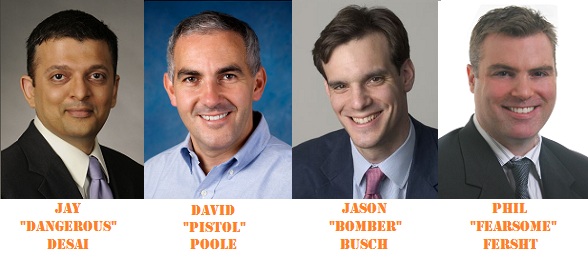
Yes, HfS has teamed with its networking partner, SSON, to present a superior discussion across the ‘hood of F&A and sourcing, with Northern Trust’s Jay Desai, one of the buy-side’s most respected voices on sourcing governance, Capgemini’s own sourcing sheriff David Poole, the pontiff of procurement Jason Busch… and bossed by HfS. We’ll be debating the burning topics in finance technology, shared services and outsourcing, waste management, and presenting some new research findings from our recent F&A studies.
As usual, we’ve haggled a blazing 15% discounts for hungry horses readers – just quote promo code “HfS_FT2010” when you register.