Folks – if you happen to be drifting around New York City on 3rd June, swing by the Philippine Cultural Center to hear some interesting discussions, including my friend and colleage Dr Stephen Stokes (pictured), author of the infamous piece "The Green Transformation of Indian Outsourcing: Heading for the Clouds, But Doing So on a Low-Cost and Carbon Budget".
The event entitled "Global Sourcing After the Meltdown: In Search of Sustainability" is being organized by my good friends Christine Bullen and Wanda Lopuch at the Global Sorcing Council. For more information click here. You can also contact Wanda directly here.
Talk tracks for the day are as follows:
Authentic Sustainability in the Supply Chain
Confronting Business and Financial Impact of Supply Chain Risks in Global Sourcing
Decoding the Green Leadership
Impact for the Obama Administration Policies on Global Sourcing
Social Responsibility in Sourcing – The State of CSR in Sourcing
Green Technology – Walking the Talk
Finding a New Balance: Can Global Sourcing Be Commercially Viable and Socially Sustainable?
IT as an Enabler of Sustainability in Global Enterprises
Trends in Global Sourcing in Post-recession Pharmaceutical Industry
Ever since President Obamaproposed to change the IRS tax codethat regulates how US corporations declare income from international activities, I've been thinking about other measures governments can take to slow the recession and help businesses become less myopic with how they navigate these rough waters.
Reading between the lines, he appears to be targeting a revenue grab, while making political overtones against companies which use offshore resources. However, he's simply penalizing firms from being more productive with their exports. Sure, there are issues with tax fraud from havens such as Bermuda or the Caymens, but this is primarily an issue with individuals, not large enterprises.
Why penalize a US conglomerate for manufacturing diapers in Brazil for the
Brazilian market? It saves a fortune in both production and shipping costs. If that firm produced those same diapers from the US, it opens the door for competitors to take away their business. Without going deeper into this proposed legislation, the point I am trying to make here is that we live in unprecedented times where major banks are effectively nationalized and governments are printing money to stimulate broken economies.
Why not go a step further and intercede with firms' rampant layoff tactics? One of the reasons why our corporations are failing is this culture of knee-jerk reactions to adverse circumstances, without an eye on the long-term. Surely this recession provides an opportunity to change this mentality?
Meanwhile, the majority of US and British firms have developed an alarming mentality to cut staff as quickly and deeply as they can, as opposed to taking measures to get to the root cause of their uncompetitiveness, namely poorly integrated business processes and an inability to operate as a global enterprise. Laying off vast numbers or workers often impedes development in becoming more globally effective and more efficient at streamlining business workflows on a global ERP backbone. Why not give firms incentives for retaining the vast majority of their workforces? If firms are encouraged to look at other measures beyond laying off, they will be forced to dig deep into their internal operations to eliminate waste, drive out hidden costs and explore innovative methods for doing things more efficiently.
Simply eliminating workers is far more harmful to an economy than offshoring some labor: it harms the culture of that firm for being focused on developing long-term careers for its staff, and immediately adds to the unemployment ranks. By retaining staff and exploring outsourcing as an alternative, the firm is broadening the experience and value of its staff, in addition to globalizing the support operations. This data point from our recent study shows why firms are motivated to explore outsourcing in this environment:
For example, one company I have spent time with has recently rolled out a new procure-to-pay platform, which has helped it manage its expenditure far more effectively, and enabled it to standardize its processes at a global level. The firm now finds itself in a far better position to explore outsourcing these processes at a far more beneficial business case then prior to its internal transformation. Hence, firms should use this market as an opportunity to get their internal processes and global operations in order. Laying off staff is simply preventing them from being more competitive – I wish politicians were focusing their anger on eliminating jobs than "shipping a few overseas".
If you’ve ever ventured into the brave world of HR Outsourcing (and you need to be brave…) the chances are you’ll hear the views of Ceridian’sKeith Strodtman.
Keith has been a constant at the global $1.6 billion HR services and store-card solutions giant for many years now, and when he’s not coaching his twin girls’ fastpitch softball team (that’s “rounders” for any Brits on here), he’s been running Ceridian’s global HRO practice. He is also widely recognized as HRO’s smoothest man, with a constant smile, never a raised word, and never a hair out of place.
Keith has some excellent views on how companies can use third-party managed services to take on their administrative work and focus their HR executives on what they should be doing: helping develop their organizations’ talent. Over you Keith…
I’m not sure about you, but I don’t get why some analysts and bloggers advocate that companies have to choose between outsourcing HR/ payroll/ benefits administration and managing talent. It’s beyond me why those two things are mutually exclusive. For an organization that wants to manage costs and retain top talent – outsourcing administration allows it to focus on their people and the business at hand, rather than paper pushing. If I may be so bold, I think the combination presents an opportunity for HR to finally get that “seat at the table”.
Studies have shown that pre-HRO, companies spent 75 percent of their resources on transactions and operations and 25 percent on strategy and management. That means resources spent on administration and processing rather than attracting great people, skills development, and performance management.
When HRO comes into play, the numbers reverse to spending only 15 percent on transactions/operations and 85 percent on strategy and management. That’s more than three times the resource allocation on the most critical parts of your business. With those numbers – talent management is getting a huge boost from outsourcing.
So let’s look at the impact:
• Resources focused on key business areas.
• Employees more satisfied doing bottom-line impact work instead of administration.
• Retention improving as as result.
• And your HR department? Well, they can now focus on talent management and add value to the business.
Worried about the costs of doing both? Apply the cost savings from HRO administration to areas that will improve organizational performance. By implementing programs for personal and professional development, succession planning, recognition programs and even ancillary benefits, it furthers the appeal of your organization now and in the future.
Actually David Poole from Capgemini did an excellent job explaining the benefits of outsourcing in this column in March. I couldn’t agree more with his “truths” – especially that “outsourcing is a bold strategy for growth.” Incorporating HRO into an organization means you are poised for growth because this economy reality will not be the economic reality one, five or even 10 years from now.
So with all due respect to my friends in the talent management business, it’s never really been an either/or proposition between HRO and talent management. It’s just a matter of looking at the pieces and deciding where HR should spend its time to add the most value to the business.
Keith Strodtman (pictured) is Senior Vice President and General Manager of Ceridian’s HR Outsourcing business. With over fifteen years experience in the Business Process Outsourcing, HR services, product management, and finance, including involvement in the pioneering days of HR Outsourcing, Keith is well versed in the benefits of HRO. Prior to joining Ceridian, he was a Director in the Global BPO practice at PricewaterhouseCoopers (now part of IBM), responsible for the HR BPO service offering and for implementing large-scale HRO outsourcing engagements.
And finally… the last tranche of our three-part interview with Kraft’s Lee Coulter. Here’s Lee’s take on attributes service providers need to demonstrate, and some advice for budding sourcing executives today…
PF: Lee, when evaluating outsourcing service providers today, what attributes should companies look for? What should they try to avoid?
LC: That is a really big question and not one I am sure I can answer in less than ten pages. Every engagement is different, and the basic dimensions of suitability are: service scope, service quality, service cost, cultural match, the leadership teams, partnership capability, and risk. Assuming that you have providers capable of doing the job and meeting the objectives, then it is about the team and the commitment to true partnership (a topic for another day). These two things lead to a measure I use… confidence. So you would score the providers
based on their claims and statements and commitments to perform, then go back and add a factor based on your collective confidence that the all of the commitments would come to pass as committed.
The ‘what to avoid’ question is easier. I look to avoid what I call “irrational exuberance”. Those are $50 words that really just mean that a provider is not truthfully representing the realities of doing this often very difficult work and works to assure the client that it’s all going to work and they are good at all of it. No provider is good at all of it, and there will be issues. It is really important to me that this dialog be about how good the group is at dealing with surprises because they will arise.
PF: And finally – you have had a tremendously successful rise to prominence in the outsourcing industry over the last decade. What advice would you impart to ambitious operations executives today hoping to achieve success, especially in light of the economy? Do you see the role of the senior outsourcing executive on the buy-side set-up to win or fail in most of today’s multinationals?
LC: The advice I give others is to always have a strategy first. Shared services and BPO are not by themselves strategies. They are enablers of strategies that help drive value. It is important to recognize as well that value is an equation. It is not simply the best service or the lowest cost. Value is the ratio of the service expectation divided by the cost. In this world of services, the focus has to be on the ratio or the value in a service. Any shared service or BPO effort that is not driven within a greater functional or corporate strategy is going to have a tough time of it. SS and BPO involve a lot of change, and to appeal to the people, you must have a grander strategy that inspires people to be more ready for change.
Along with a strategy, create an environment that gives your company the genuine permission to demand that they be served by the highest value provider of services. Make it okay for all parts of the business to question the services, costs, quality, and comparability of all of the service providers that serve the company. When there is freedom to question what you have today and compare it against the world of other internal and external groups that do similar work, amazing things become possible. At GE I learned to take the best ideas (not patented or copyrighted of course!) proudly from anywhere and use them. There are great shared services, captives, assisted captives, and outsource service providers out there today doing fantastic work that can benefit your company. The key is creating a ready and receptive client at the same time you lead steady stream of improvements that take you up the value spectrum. Finally, the buy-side outsourcing executive has their own fate in their hands. Done well, shared services and outsourcing can reduce capital, improve cash flow, reduce cost, variable-ize traditionally fixed cost services, improve speed to market, and deliver transformation in non-core areas that can translate into a cumulative competitive advantage. Done poorly, organizations can be damaged by trying to do too much, too fast or by trying to skip essential steps where critical behaviors are learned.
PF: Lee – thanks so much for your time with us, I know many of our readers will enjoy hearing your views.
So with all the talk about falling conference attendances, it's clear that people are still game for good events, but are simply being more selective about which ones they choose to attend this year. After the success of the recent Shared Services & Outsourcing Network show in Budapest, I had the good fortune to be at AMR Research's Supply Chain Conference in Scottsdale AZ this week, which attracted 650 senior-level supply chain, finance, operations and IT executives, many of whom wanted to talk about sourcing issues.
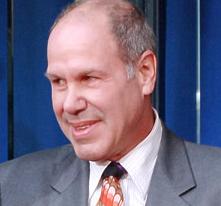
The one opportunity I did have to escape the analyst meeting room was to see former Disney CEO Micheal Eisner's keynote speech (pictured), where he talked about creativity under financial constraints being the key to success today.
In order to demonstrate this, he played us the now infamous "sword" scene from Raiders of the Lost Ark:
According to Michael Eisner, Harrison Ford was having a few stomach issues on that day of filming and kept rushing back to the hotel, and with the sun setting, the crew were concerned that they would have to wait until the following day to complete the scene. With production costs running at $100K a day (not chump-change in those days), Harrison just got out his gun and shot the guy… now that's innovation 😉
Always happy to hear any more examples of creativity that saved the day…
There's one character in the sourcing business those "in the know" know… Larry Janis. When senior management look to hire or poach key talent, Larry is known as the discreet man with the black book. He's also a great guy, and agreed to post a few suggestions on what sourcing executives should be doing to shape their careers in this environment. No-one in the business knows the hiring dynamics of buyers, consultants and service providers as well as Larry…
PF: Larry – you’ve been a lead search consultant in the sourcing industry for many years. In terms of roles and openings both buyers and service providers are looking for, what’s changed today?
LJ: The stress in the global economy has certainly changed in the outsourcing provider space. Add to this, HP/EDS merger/acquisition, the Satyam scandal and staff reductions at several of the major providers. As a result, both the
buyers and providers have scaled back many of the large hiring initiatives we have seen in the past and the process has become more selective and significantly longer. There is some common ground between both the buyers and providers, both sides are seeking individuals who can add value to the organization. On the operations/shared services/delivery the companies are seeking individuals who can improve processes, profitability and end user satisfaction. The sales disciplines are more focused on track record of success, industry focus and abilities to open doors in new accounts and new avenues. The need the abilities to connect the dots between technologies, customer needs and markets in new ways.
LJ: Mostly, I am still recruiting for what I've always looked for: extremely smart and talented people who love to work hard, who are passionate about what they do and achieve success.
PF: Who’s hiring at the moment – where are the openings?
LJ: The market at this point is mixed; there are still strategic hiring initiatives taking place on the buyer and provider sides of the marketplace. These are on both the sales and delivery sides.
LJ: An example of this was just today, I spoke with a senior executive at Accenture this morning and in our discussion he indicated he is constantly looking to improve the caliber of his team. He looks for people with the abilities to react to market shifts, be able to bundle large complex deals into successful sales.
PF: Are you seeing a pick-up in job vacancies for sourcing consultants from the boutiques or the management consultants?
LJ: Most if not all of the sourcing firms and management consulting have been hit by the economic down turn. The advisory firms like EquaTerra, TPI and Deloitte have all mad some forms of adjustments. Several of the players have changed out the underperformers. There has been hiring across the board, but very slowly and only in anticipation of concrete demand. By sector ITO is stronger than anything else but very respectable in F&A, HRO, and procurement.
PF: What sort of roles are in decline?
LJ: I believe there is less hiring being done today than a year ago. I am not sure I can make a statement to define specific roles that have been affected. There is one industry sector that has been hit harder than others it would be HRO. This part of the market seems to be very quiet, this would include the larger offerings like those at Hewitt and Accenture. RPO has also had its set backs.
PF: What advice do you have for sourcing professionals today looking for a new job, or new challenge? How should they go about finding new vacancies?
LJ: Being your own best selling tool, you must emphasize what's important about you, as an individual, and how your own talents, skills and capabilities can deliver short- and long-term value to an organization.
LJ: Start by being aware of internal job postings; while doing this insure your boss and you are communicating effectively and that his or her direction is important to you. While doing all of the above, insure your personal network is up to date! Participate in some of the social networking tools such as LinkedIn, Plaxo, etc. Write an article, participate in blogs like Phil’s and oh yeah….UPDATE your resume, look at opportunities that present themselves they could be viable. Talk to headhunters. Especially if you get a call from me.
PF: How effective are social networking tools, such as twitter and LinkedIn for sourcing jobs?
LJ: Social Networking attracts millions of visitors every month, it can provide opportunities for individual interaction and relationship building which is certainly an initial step in exploring options. When you use sites such as LinkedIn or Plaxo you should:
Update Your Profile- A complete, updated profile helps recruiters find you with opportunities.
Get Recommendations- Your profile represents you so make sure you put your best foot forward.
Add Connections- Your chances of getting any job or obtaining information on an opportunity you are exploring are both enhanced when you know someone at the company Some companies and job boards post job openings on Twitter, and job seekers regularly network through Twitter to help facilitate their job search. Users can search the whole Twitter universe by topics and keywords to find relevant posts and authors..
PF: And finally, how can Horses readers get in touch with you about opportunities?
LJ: You can reach me by phone 516-767-3030, email me here or just ask Phil
PF: Thanks Larry – am sure many of use here appreciate your time today.
Larry Janis (pictured) is Managing Partner for specialist sourcing executive search firm ISSG
If the Queen was handing out honours for outsourcing, then “arise Sir Kevin” would be a likely outcome. However, unless Accenture can grant him a British passport, even their PR heavyweights may struggle to pull that one off.
Kevin Campbell is a legend in the outsourcing business (I refrained from saying “the Tiger Woods”…), having begun his career with the old Andersen Consulting business in the 90’s before making his name as the COO of Exult, the protagonist of HR BPO, where he because synonymous with many of the early multi-process BPO deals for clients such as BP, Bank of America and International Paper.
Upon Exult’s sale to Hewitt in 2005, Kevin found himself returning to his roots with Accenture, where he how has been elevated to overseeing the firm’s entire $9.2 billion global outsourcing business, when he’s not watching re-runs of the Packers and terrorizing his kids.
I managed to catch-up with Kevin recently, and was surprised to hear he’s a regular visitor here, so convinced him to share some of his views on the industry with us…
PF: We’ve been through a tremendous development in the world of both ITO and BPO over the last decade. What, in your opinion, has worked, and what hasn’t?
KC: No matter how far this industry evolves, the common denominator for success is a business case that works for the customer: a good business case backed by a solid solution that delivers. And each deal has to be good for both the provider and customer, so if you are an outsourcing buyer and the price seems too good to be true, you will likely live to regret it. Providers need to be disciplined in bidding and know when to walk away from an opportunity. Often times, service providers are known more by the deals they walk away from than the ones they do. “Getting better” over time is also critical. The customer has to be a wise buyer of outsourcing services and the provider needs to become more productive during the life of the deal. Lastly, something I don’t see enough of is the focus on defect-free delivery. ITO and BPO both run most efficiently and effectively when they are free of operational errors and defects. And providers must not forget to eliminate any variation in the quality of their services nor lose sight of the impact it has on their client’s business as while SLAs might be green, the client won’t be happy.
PF: We’re clearly at an inflection point in the industry as the fog lifts from this Great Recession. Do you see companies approaching outsourcing any differently? And which areas of outsourcing do you see developing in the near/long term?
KC: Today’s economic environment presents a great opportunity for outsourcing to accelerate in the marketplace. Outsourcing is fueled by change and one thing companies can’t do today is just stand still; they need to adapt and do things differently. And I’m not talking about incremental change—it is big, fundamental change, both from a business model perspective and the use of emerging technologies such as cloud computing and Software-as-a-Service (SaaS). Particular industries which will likely embrace such change include banking, insurance, healthcare and most of the direct-to-consumer businesses like retail and telecom. And the whole mindset toward outsourcing will evolve as the challenge that comes with the word “Outsourcing” is the prefix “out”. In the future, we’ll see companies creating new capabilities or new markets and they will just make sourcing decisions based on which provider can deliver the relevant services and it won’t be considered as sending something “out”.
PF: What is your definition of innovation within outsourcing and are we really seeing it in today’s engagements?
KC: Innovation is doing something that stretches the boundaries of what has been done before or does it in a much less-costly way. For example, it could be a simple application of technology to a people-oriented solution. It might be collecting data and presenting it in a meaningful way so people can act, or it could be identifying a way to drive cost out of a business process or using BPO in a new functional area.
The Group Chief of Outsourcing at Accenture, Kevin Campbell gestures during a press conference in Bangalore
PF: You coined the phrase “Bundled Outsourcing” a few years’ back…Do you really believe we’re going to see a strong inter-linkage between IT and BPO service delivery in the next three years?
KC: The concept was—and still is—absolutely right. People cannot afford nor are they capable of effectively managing all the relationships they have with different vendors. Perhaps what we should do now is add the word “sequential” in front of bundling. “Sequential Bundling” is something we are seeing more and more frequently. This is where a customer continues to do more with a provider based on a successful relationship and positive experience. Will we see a return to one-vendor days? No, but I believe we will see people continue to move to two to three strategic providers across the majority of functions and toward business process sourcing.
PF: What is your opinion of the emerging locations, such as the Latin countries as nearshore hubs for US-driven ITO/BPO engagements?
KC: We’ve had a strong presence in Latin America for years and have thousands of people doing work for domestic clients. We have recently seen acceleration in the use of Latin America for both Spanish and North American clients and we expect an increasing leverage of Latin America to deliver services.
PF: Do you see China playing a more influential role in delivering ITO/BPO services in future?
KC: Yes. We’ve had an outsourcing presence in China for several years and the time and environment is now right to accelerate the use of China for ITO and BPO services. Chinese companies understand the imperative to leverage its large labor resources and improve their talent needs. This will in turn make them more competitive and force international competitors to be more creative in their talent sourcing strategies.
PF: Are there other sourcing locations you believe have a pivotal role to play?
KC: The Philippines will continue to play an important role. We began using the Philippines to deliver outsourcing work back in 1990 and it is now the second largest node in Accenture Global Delivery Network providing a full range of services globally including AO, IO and F&A, HR and Customer Contact BPO, as well as industry-specific services to utilities, telcos, airlines, insurance and health and life sciences companies. Other locations that deserve more and more consideration in the future include Vietnam, South Africa and Russia.
PF: How do you see the service provider landscape playing out in this market?
KC: I think the cycle of innovation, growth and then consolidation will continue. Will we ever see the volume of new companies being founded that we saw during the late 90s or early in the decade? It’s unlikely, but there will always be people who feel they have a better ‘product’ to offer and believe they can disrupt existing providers. However it is very difficult for a small company to grow and go against the big, major players. Eventually, the extensive resources of large providers allow them to narrow the competitive advantage, and then on-going investment, stability and financial strength force market consolidation.
PF: Which providers will emerge stronger / weaker, and do you see a lot of consolidation moving forward?
KC: I do see consolidation going forward and think we could see some interesting combinations. Today’s economy will play a role in shaping the outsourcing industry and force companies to look more closely and critically at their current business models. Those with a broad set of interlocking services will fare better as they will have the most to offer clients in terms of operational efficiencies and business impact.
PF: Do you see more integration between software vendors and services providers as opposed to services providers buying each other?
KC: Service providers and software vendors operate on different business models and I don’t see them co-existing in significant ways over the long haul. Now that doesn’t mean we might not see a service provider buy a software company, or more providers using software as a service, but I still believe strong alliances are more sustainable.
PF: And finally – you have had a tremendously successful rise to prominence in the outsourcing industry over the last decade. What advice would you impart to ambitious executives today hoping to achieve success, especially in light of the economy?
KC: Thanks. If you make sure you have great people on your team and work with great clients, the rest will take care of itself. Any personal achievements and successes are due to having great mentors; great clients who are often time also friends; and being fortunate enough to lead the most talented teams on the planet.
PF: Thanks for sharing your views with us Kevin
Kevin Campbell (pictured) is responsible for Accenture’s global IT and BPO outsourcing business, which provides application, infrastructure and business process services to more than 650 clients globally.
When you try and quantify the impact social media is having on industry, it's actually quite alarming how dangerous this medium can be on our lives and our careers.
We discussed the impact of blog culture over a year ago, but the speed by which social media has crept into our daily activities, already dates many of the opinions expressed back then. The information world has altered radically, and this economic environment is accelerating the speed of change.
As an analyst in global services industries, my job is to get across insight and opinion to as wide an audience as possible. A couple of years' ago, if I'd produced an article or report, I'd probably send it out to about 100 people… that was the extent of the audience with which you would typically deal, and you'd rely on your firm's marketing department to disseminate press releases and media advisories to drive more eyeballs to your craft.
Now I'll put out a couple of tweets and likely blog piece to a network of literally multiple thousands to capture attention. Within hours, the word is out and people will either react quickly with their comments, or choose to ignore it. For example, the April Fools' Day blog post Obama to ban offshore outsourcingreceived 18,000 web-hits within a 24-hour period, while a more routine industry piece Wipro and Oracle partner to blow-up the BPO delivery modelstill managed 4,000 eyeballs within hours of being published. Clearly, catchy headers get attention, but more importantly, it's the delivery of information which is changing the game. So where I could, in my past, comfortably manage my network of 100, it's now an insane group of thousands right across the globe.
So what should you read into all of this? Basically, we're deluged with a massive overload information and have to scan selectively data to extract the points we need. We're all getting Attention Deficit Disorder (ADD) whether we like it or not, as information is thrown at us from blogs, tweets, emails, websites, Facebook, LinkedIn etc.
So who's at risk?
Media: People are becoming incredibly selective about visiting media websites these days. The days of pulling people to media-sites are over; it's about pushing information to willing audiences. Tier 2 media publications in the past could easily convince advertisers to spend money with them – now it's a lot harder. Most sell-side firms are much savvier at understanding how to attract eyeballs to their wares. Some tier 2 media publications barely get a few web-hits a day in today's industry – and it's getting worse for them. They need to pull people to their sites, and can't expect to sit pretty, waiting for people to magically stumble upon their content – regardless of how good it may be. Most media sites which fail to drive compelling content through social networks, will not be around this time next year.
Analysts and Consultants: Executives want to know the low-down on industry occurrences the day they happen. They also don't have anything like the time or patience to read more than 500+ words on a topic. While there is still a need for seminal reports that evaluate vendors and markets, the general commentary and analysis of topics and events as they happen has completely changed. Analyst firms which cannot get their reaction out to industry quickly are wasting a lot of their own time and resources. The same applies to consultancies which have traditionally relied of quality white papers to excite prospective customers about their skills and experience. No-one has time to read entire papers these days, so consultants need to use smarter channel to get their qualities to market.
PR firms: No-one opens press releases these days… unless they're compelling. Moreover, many firms today find they can deliver their own press release info by pushing the news out to interested people via social networks. And it costs them nothing. Some PR agencies charge over $1000 to distribute a press release and manage the follow-up. I'd be surprised if many smart firms still followed that practice today. Hence, PR specialists need to push their clients' news to targeted influencers in social networks, with the hope they will relay the information to their massive networks in turn. The old way of doing things is quickly dying, and many PR agencies which fail to live with the chance will fall by the wayside.
Service Providers: The traditional means of influencing markets and creating awareness are dramatically changing. Ultimately, service providers need to influence their prospects and those people influencing them, and shrinking marketing budgets are driving them to make smarter and bolder investment decisions. Getting shorter, sharper messaging out to market is key, and the influencers are changing too. Targeting consultants and analysts with powerful social networks is increasingly important, in addition to using smarter PR vehicles that micro-target the right audiences. Most buyers today simply want to know who's out there who's working with firms like them – and whether they fit the bill. Hence, marketing messages that are more direct, better targeted, and to-the-point are paramount. Long-winded sales presentations and lengthy brochures / white papers are a thing of the past.
So what's the solution? While disruption is clearly hurting the majority, opportunity is opening up for the smarter minority. The key is to go with the change, cut down on the verbiage and source the new channels and influencers that reach your audience. You might well be surprised by the speed of the change…
It's easy to get excited with high-growth markets, but supply management BPO's different.
While the market has grown exponentially, and a 30% increased expenditure last year is eye-opening, the nature of these engagements doesn't give me confidence that this market will sustain its growth trajectory unless customers think beyond short-term labor arbitrage, and service providers introduce significant process and technology enhancements to the early adopters to help them optimize their delivery. This "lift and shift" model could well result in customers losing more than they save. Read more at Think Global.
I never knew that one day I would get to co-host a webcast with the great John Hagerty, but tune in on June 18th at 2.00pm ET to hear about Transforming the Global Finance Function in Today's Economy. Click here for full details, or register directly here. And like everything else here, it's FREE FREE FREE.
John is a true legend in the analyst world, where he delivers insights in the world of finance transformation, performance management and corporate governance. He could also convince Newt Gingrich to vote for the communist party in 2012. In addition to the great "Hags" and myself, you'll also get to hear from Joe Spears, senior finance executive at eBay, and Dominick DiPaolo, BlackLine Systems.
John Hagerty (pictured) is Vice President and Research Fellow for AMR Research. He is the recognized worldwide authority in business intelligence and enterprise performance management. This picture also reveals the wear and tear of the analyst life -:)


 Folks – if you happen to be drifting around New York City on 3rd June, swing by the Philippine Cultural Center to hear some interesting discussions, including my friend and colleage Dr Stephen Stokes (pictured), author of the infamous piece "The Green Transformation of Indian Outsourcing: Heading for the Clouds, But Doing So on a Low-Cost and Carbon Budget".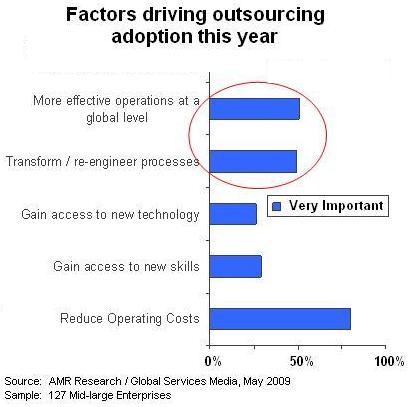

 And finally… the last tranche of our three-part interview with Kraft’s Lee Coulter. Here’s Lee’s take on attributes service providers need to demonstrate, and some advice for budding sourcing executives today…
  So with all the talk about falling conference attendances, it's clear that people are still game for good events, but are simply being more selective about which ones they choose to attend this year. After the success of the recent

 When you try and quantify the impact social media is having on industry, it's actually quite alarming how dangerous this medium can be on our lives and our careers.